Best Water-Resistant Wooden Flooring in Toronto
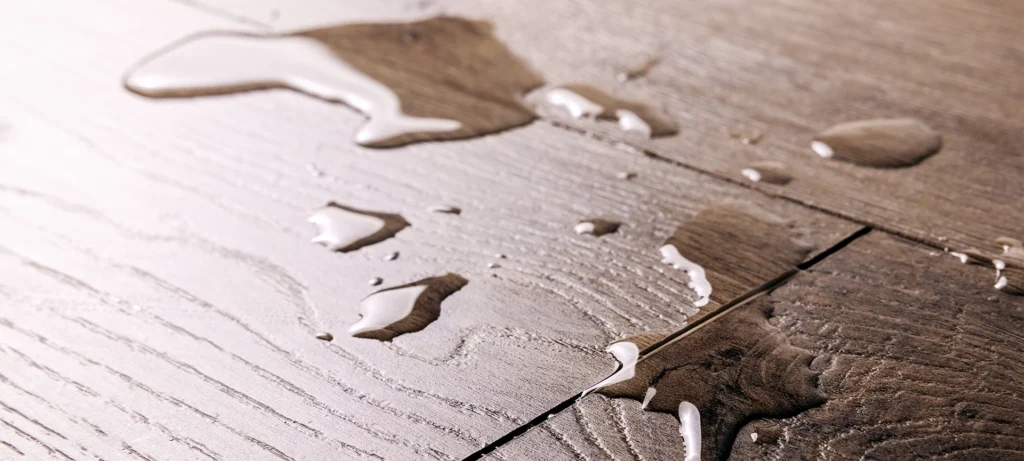
Toronto’s climate swings from humid summers to freezing winters. That mix of heat, humidity and salt-laden slush can spell trouble for traditional hardwood flooring. Water-resistant wooden floors offer the warmth and beauty of wood with added defence against moisture damage.
In this guide, you’ll gain a clear understanding of why moisture protection matters here, see the leading product types and brands, learn key evaluation criteria, and discover where to buy and how to install and maintain your new floors for lasting performance.
Why Water-Resistant Flooring Matters in Toronto
Water-resistant wood flooring matters in Toronto because everyday moisture threats swiftly degrade untreated floors. Basement humidity, tracked-in rain and melting snow all contribute to cupping, warping and discolouration in standard hardwood.
Even small leaks around appliances or spillages can lead to costly repairs or premature replacement. By choosing flooring engineered to resist moisture, you protect your investment, reduce maintenance needs and enjoy stable, attractive floors year-round.
With proper installation and care, water-resistant wood maintains its integrity through seasonal shifts, preserving both functionality and style in your home.
Related Article: Is Vinyl Flooring Waterproof?
Types of Water-Resistant Wooden Flooring
When shopping, you’ll encounter several floor constructions designed to blend real-wood aesthetics with moisture defence. Understanding each type helps you match performance to location and budget.
Engineered Hardwood
Engineered hardwood flooring consists of a thin real-wood veneer adhered over cross-layered plywood or high-density fibreboard (HDF). This layered core stabilizes the plank against expansion and contraction, significantly improving resistance to seasonal humidity changes.
Veneers typically range from 2 mm to 6 mm in thickness, allowing for one or more refinishes over the life of the floor.
Related Article: Engineered Vs. Solid Wide Plank Hardwood Flooring: Key Differences
Laminate with Water-Resistant Core
Laminate flooring uses a high-definition photographic image of wood over an HDF core. Premium water-resistant laminate lines feature sealed edges and moisture-blocking underlayments to keep spills from penetrating the core.
While not true wood, these products convincingly emulate oak, maple and other species at a lower cost.
Wood-Plastic Composite (WPC)
Wood-plastic composite flooring combines recycled wood fibres with PVC polymers in a rigid core. A durable wear layer and embossed grain finish sit atop the core, offering full waterproof performance.
Click-lock installation makes WPC ideal for basements, bathrooms and kitchens where moisture exposure is highest.
Vinyl-Laminate Hybrid
Some manufacturers blend vinyl’s waterproof planks with a wood-grain image and an HDF core. Though these hybrids sacrifice a true hardwood surface, they excel when spills are frequent. They install with simple locking profiles and come in wide-plank formats for a modern look.
Related Article: Common Mistakes When Installing Vinyl Plank Flooring
Strand-Woven Bamboo with Sealed Finish
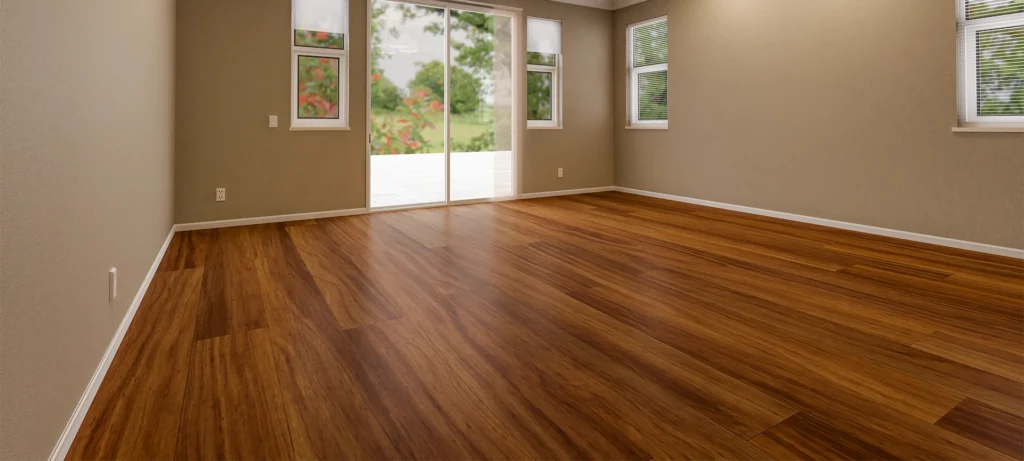
Strand-woven bamboo is engineered under high pressure, producing a dense, strong material. When finished with multiple coats of factory-applied, water-resistant UV polyurethane, it performs well against moisture – best on upper levels and main living areas rather than damp basements.
Key Features to Evaluate
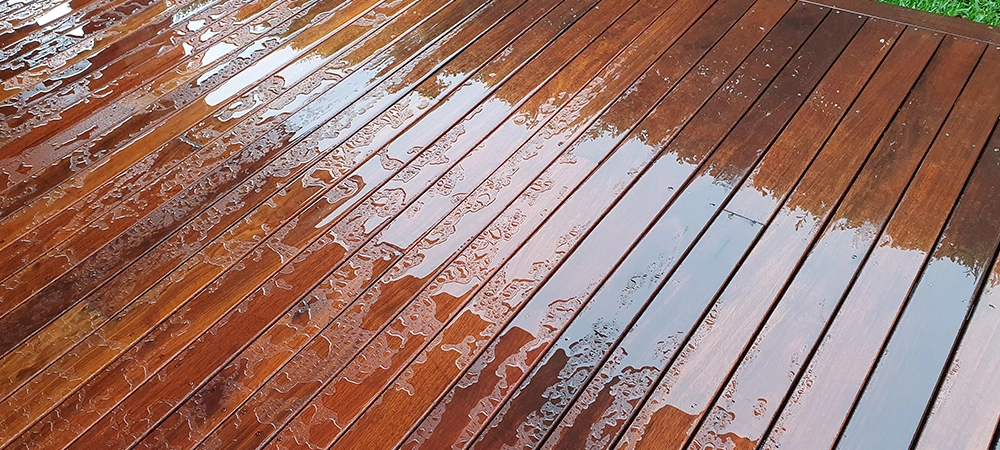
Not all water-resistant wood floors perform equally. Focus on these critical attributes to ensure you select a product that holds up over time.
- Core Construction: Floors with multi-layer plywood or WPC cores excel in dimensional stability. Avoid products with single-layer cores that may swell or delaminate when exposed to moisture.
- Edge Seal: Look for factory-sealed click-lock edges or onsite post-install sealants. Unsealed edges leave gaps where water can seep, defeating the moisture barrier.
- Wear Layer Thickness: For engineered hardwood, a veneer of at least 3 mm supports future refinishing. Laminate wear layers are measured in mils; seek 12–20 mil for heavy residential use.
- Finish Type: UV-cured polyurethane and aluminum oxide topcoats resist scratches and moisture. Matte and low-sheen finishes also hide scratches better than high gloss.
- Warranty Details: Confirm that your warranty explicitly covers water damage and staining. Residential warranties typically range from 10 to 25 years, depending on the brand and installation type.
Related Article: How to Fix Water-Damaged Hardwood Floors
Installation and Maintenance Tips
A floor’s water-resistant claim is only as good as its installation and care. Follow these best practices to protect your investment.
- Acclimation
Bring flooring materials into the installation area and let them sit for 48–72 hours. This equalizes moisture content and minimizes post-install shifts or gaps. - Subfloor Preparation
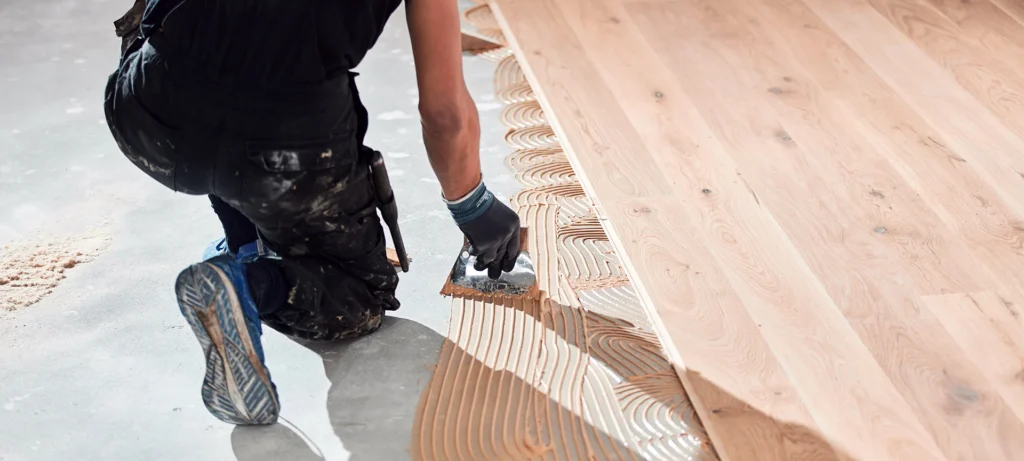
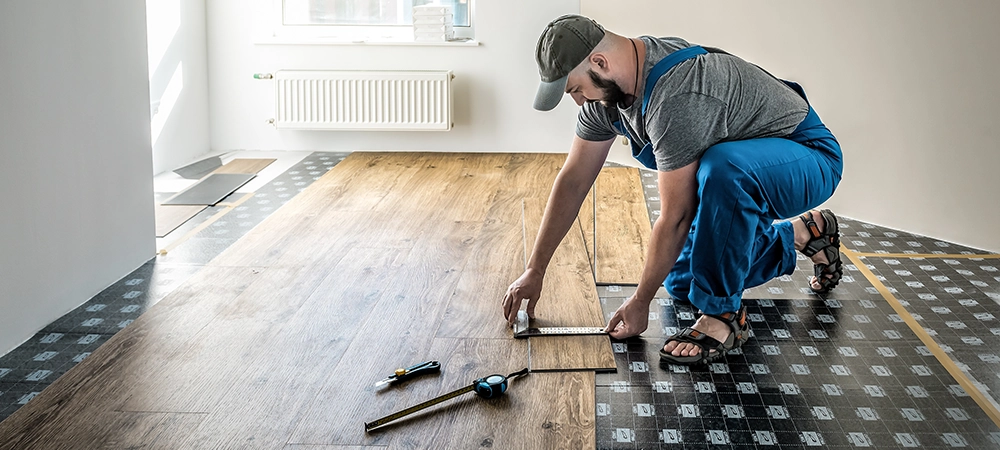
Ensure the subfloor is clean, dry and level within manufacturer tolerances. Install a suitable moisture barrier underlay to block ground moisture on concrete slabs. - Professional Installation
Certified installers understand expansion gaps, transition profiles and proper sealing. Skilled workmanship prevents gaps and uneven seams where moisture can intrude. - Cleaning Routine
Sweep or vacuum daily to remove grit. Use a damp mop with a pH-neutral, manufacturer-approved cleaner. Avoid steam mops and oil-based soaps that degrade finishes. - Immediate Spill Response
Wipe up liquid within minutes to prevent pooling at seams. Even waterproof floors can trap moisture under loose rugs or mats.
Selecting Your Ideal Floor
Choosing water-resistant wooden flooring involves balancing style, budget and performance. Start by assessing moisture risk in each room – kitchens, mudrooms and basements need the highest defence. Match that to your desired look: real wood veneer, realistic laminate or waterproof vinyl-core.
Prioritize products with robust cores, sealed edges and proven warranties. Finally, lean on professional installers like LV Hardwood Flooring to achieve a flawless fit and finish.
With the right research, expert guidance and proper upkeep, your water-resistant wood floors will remain beautiful and resilient through Toronto’s seasons. Invest wisely today to enjoy lasting warmth, character and protection underfoot.
Contact us today and get a free quote. Or visit our showroom in North York.