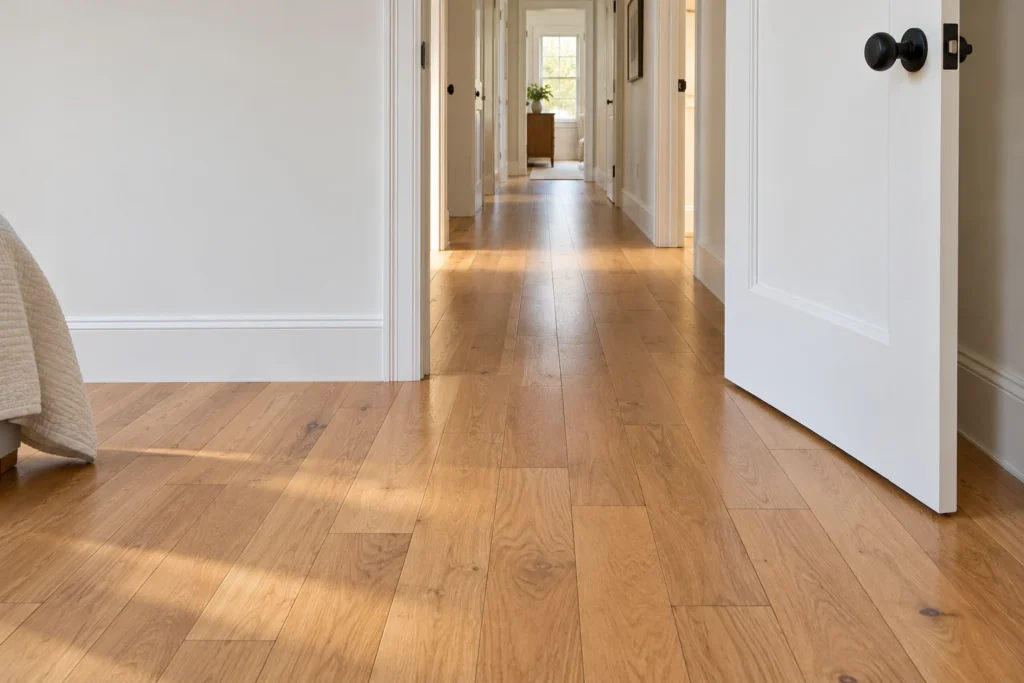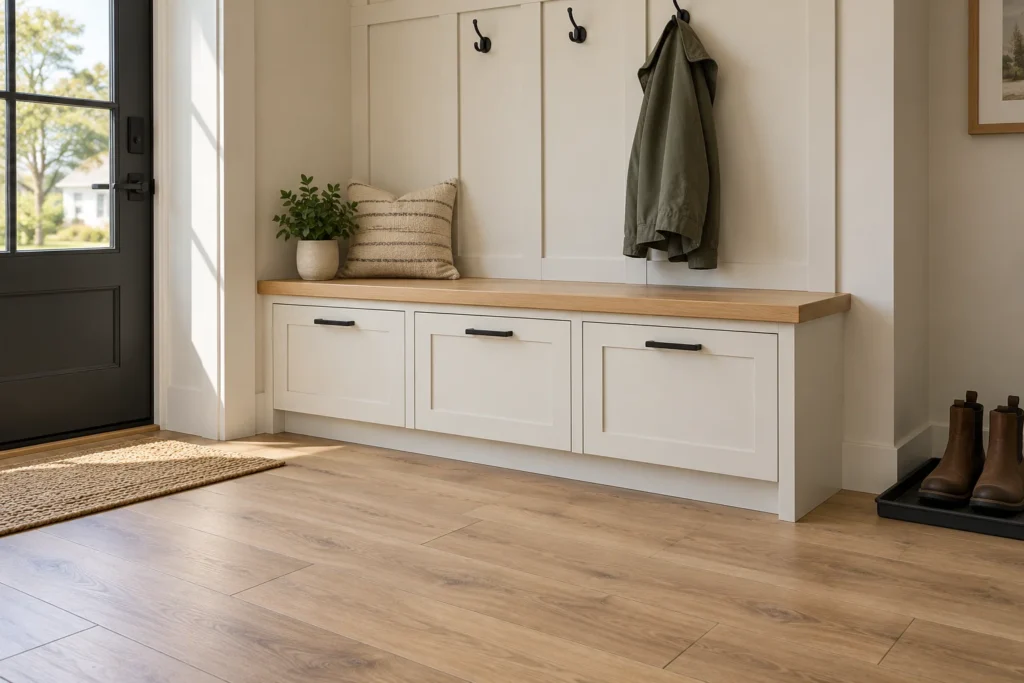
Can I Install Engineered Hardwood Flooring Over Existing Floors?

Homeowners often face the dilemma of wanting to upgrade their flooring without the hassle of removing the existing one. It’s common to find most homes with engineered hardwood floors, as they’re known for their durability and aesthetic appeal.
Engineered hardwood can sometimes be installed over an existing floor, but the selected manufacturer must permit the specific substrate and installation method. Stability, bonding, flatness, moisture and finished height must be assessed before deciding to retain the old surface.
This blog will explore the feasibility of installing engineered hardwood over existing floors. We also discuss the benefits and the best installation method.
How to Install a New Floor Over an Old Floor
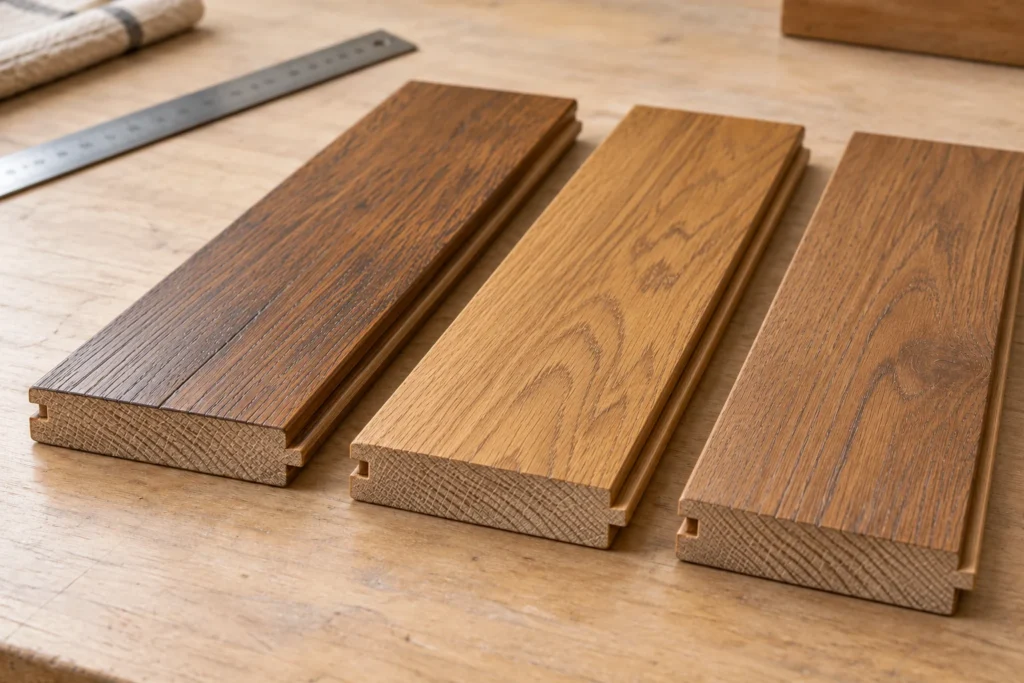
Before discussing the installation process, it’s crucial to understand what engineered hardwood is. Unlike solid hardwood, engineered hardwood consists of a top layer of real wood veneer adhered to layers of plywood or other wood. This construction provides stability and resistance to humidity and temperature changes, making engineered hardwood a versatile flooring option.
Here are three advantages of engineered hardwood
- Versatility: Some products are approved for concrete or radiant-heated assemblies. Check the exact product, installation system and any species or heating restrictions.
- Durability: Layered construction can improve dimensional stability, but engineered wood still needs the specified indoor conditions and moisture control.
- Variety: Available in numerous styles, colours, and finishes to match any decor.
Related Article: How To Replace Old Carpeting With Engineered Wood Flooring: A Step-By-Step Guide
Installation Over Existing Floors
An existing surface can remain only when the selected flooring and installation system approve it. Do not treat carpet or a loose, cushioned or unstable floor as a suitable base for hardwood. Removal may be required to establish an acceptable substrate.
When preparing to install your engineered hardwood flooring over existing floors,
- Assess the Existing Floor: Check that the existing assembly is stable, suitably flat and within the flooring system’s moisture limits.
- Clean and Repair: Identify the existing materials before preparation. Use only repairs and preparation methods suitable for the substrate and approved installation system.
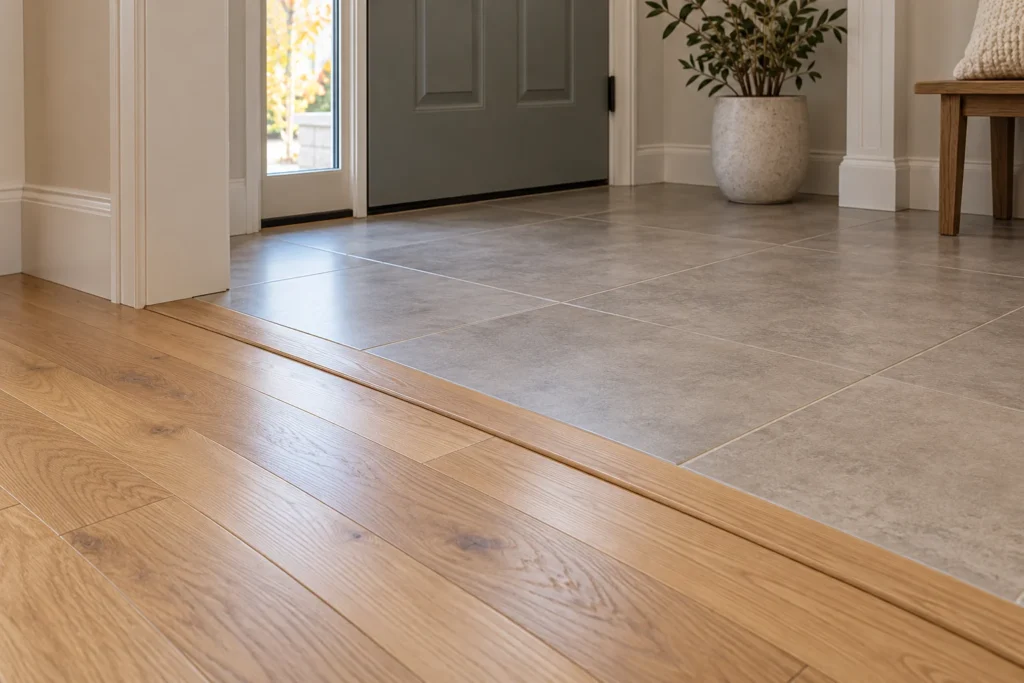
- Check for Height Issues: Consider door clearances, thresholds, and transitions to other flooring types.
Can hardwood flooring be installed over tile?
Some engineered products allow installation over suitable existing ceramic or stone tile. The tiles must be sound and securely bonded, and grout depressions, flatness, moisture and finished floor height need assessment. The flooring and adhesive instructions determine whether the surface can remain and what preparation is required.
Can hardwood flooring be installed over linoleum?
Identify the existing covering first. Linoleum, sheet vinyl, cushioned flooring and loose or floating layers are not interchangeable substrates. Install over an existing covering only when the selected flooring system permits that material and condition. If older flooring or adhesive may contain asbestos, have a qualified professional assess it before it is disturbed. See Health Canada’s renovation-safety guidance before disturbing suspect materials.
Floating vs. Glue-Down Methods
Floating and glue-down are two options to compare when the product and existing substrate permit them:
- Floating Floor Method: An approved floating floor forms a connected assembly without attachment to the substrate. It may use click joints or specified joint adhesive, with the required underlay, expansion space and transitions.
- Glue-Down Method: Direct bonding to an existing surface is suitable only when both the flooring and adhesive instructions permit it. Surface condition, moisture and preparation requirements govern the decision.
Benefits of Installing Over Existing Floors
When the existing surface is approved to remain, possible benefits include:
- Cost-Effective: Eliminates the need for costly and time-consuming removal of the old floor.
- Eco-Friendly: Reduces waste by not discarding the existing flooring.
- Less Disruption: Faster and less intrusive installation process.
Considerations and Challenges
Moisture testing and height transitions are things to consider when installing a new flooring over an old one.
- Moisture Testing: Essential to prevent warping or damage to the new flooring.
- Subfloor Quality: The existing floor must be structurally sound to support the new engineered hardwood.
- Height Transitions: The new floor’s added height may require door and fixture adjustments.

Professional Installation vs. DIY
While installing engineered hardwood over an existing floor can be a DIY project, hiring professionals like LV Flooring ensures a seamless and efficient process. Professional installers can navigate the challenges and nuances of such installations.
Some reasons to opt for professional installers are,
- Expertise: Professionals can handle unexpected issues and ensure a high-quality finish.
- Tools and Equipment: Proper tools are crucial for precise cuts and fitting, especially around corners and edges.
- Time-Efficiency: Experienced installers can complete the job quicker with minimal disruption to your daily routine.
Maintenance and Care
Post-installation, proper maintenance is key to extending the life of your engineered hardwood flooring. Follow the tips below.
- Routine dry cleaning and the cleaner and application method approved by the flooring manufacturer; avoid wet or steam mopping
- Immediate cleaning of spills to prevent moisture damage
- Use of furniture pads to prevent scratches
- Avoiding harsh chemicals and abrasive cleaning tools
Related Article: Can You Reuse Engineered Hardwood Flooring? A Comprehensive Guide
Transform Your Home with LV Flooring
Keeping an existing surface is an option only when the product, installation system and site assessment support it. Compare preparation, finished height and long-term suitability with removal before choosing the scope.
At LV Flooring in Toronto, we are committed to helping you transform your home with the perfect engineered hardwood flooring. Our team of experts will guide you through every step, from selection to installation, ensuring your complete satisfaction.
Contact us at (416) 665-5645 for a consultation and explore our range of flooring options.