How to Choose a Flooring Contractor in Toronto: Questions to Ask and Red Flags to Watch For (2026)
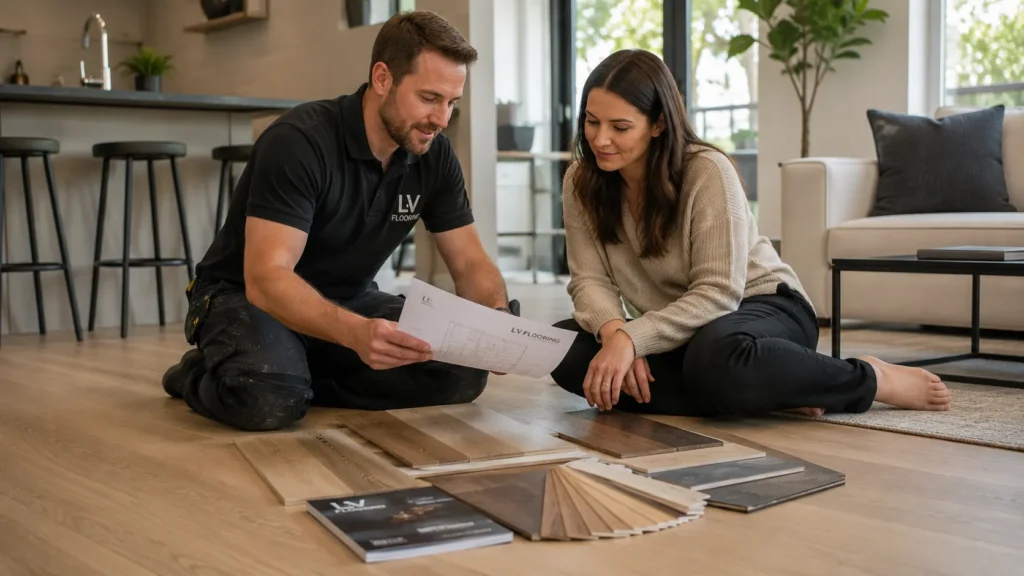
Choosing a flooring contractor is one of those decisions where the cheapest quote often costs the most in the end. We’ve been called in to fix more botched installations than we can count — cupped boards from a floor that was never acclimatised, hollow spots from bad glue-down work, a condo floor torn out because it failed the board’s sound requirements. The frustrating part is that almost all of it was avoidable. The homeowner just didn’t know what to ask before signing.
This guide is the conversation we’d have with a neighbour who asked us how to hire the right person — the questions that actually matter, and the warning signs that should make you walk away.
Ask these questions before you sign anything
A good contractor will answer all of these without hesitating. Watch how they respond as much as what they say.
“Are you insured, and do you carry WSIB coverage?” This is non-negotiable. If a worker is injured on your property and the contractor isn’t WSIB-covered, the liability can land on you. Ask for proof, not a verbal “yes.” We’re fully insured and WSIB-covered and provide the documentation on request — condo boards ask for it too.
“Do you supply the material yourselves, or subcontract it?” There’s a real difference between a company that manufactures and installs its own floors and one that buys from a third party and marks it up. As a manufacturer, distributor, and installer, we control the product from raw material to finished floor — which means better pricing and one point of accountability if anything goes wrong.
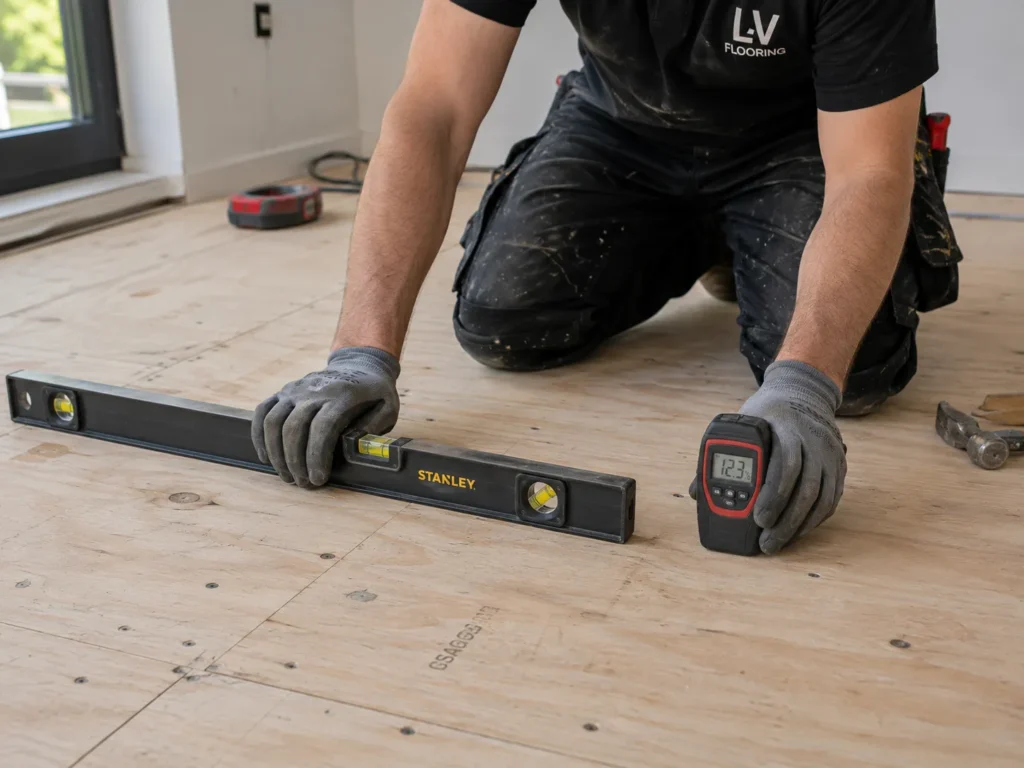
“How do you handle subfloor prep?” This is the question that separates pros from the rest. A cheap quote often assumes a perfect subfloor. In reality, GTA homes — especially older ones — often need levelling, plywood, or moisture testing before a single plank goes down. A contractor who doesn’t mention subfloor assessment is either inexperienced or hiding costs that will appear later.
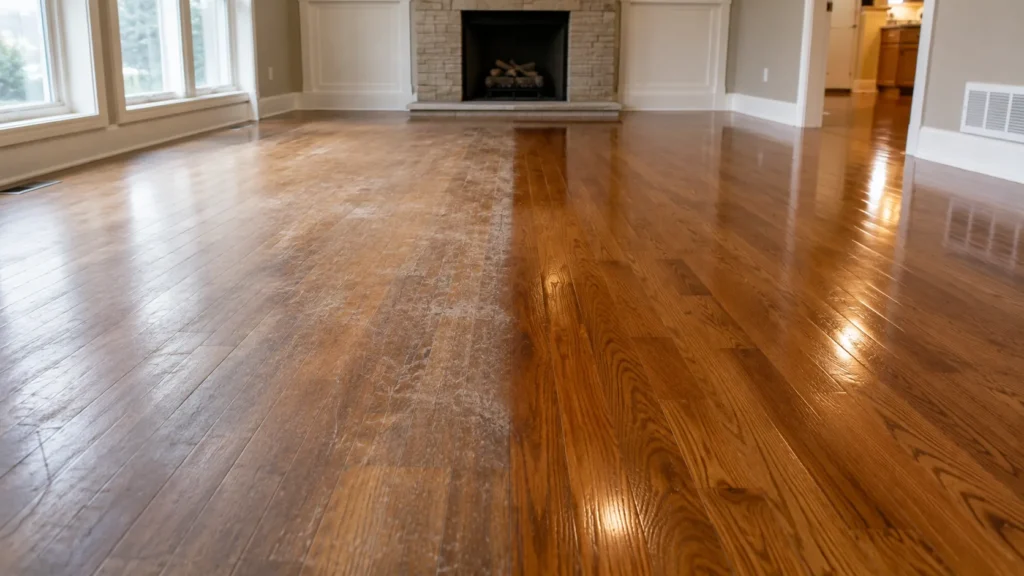
“Will you acclimatise the wood before installing?” Hardwood and engineered flooring need to sit in your home for several days to adjust to its humidity before installation. Skipping this is the number-one cause of gapping and cupping down the line. If the answer is “we install same-day,” that’s a problem.
“What does your quote include — and exclude?” Get it in writing: removal of old flooring, disposal, subfloor prep, materials, labour, and finishing. Vague quotes are where surprise charges hide.
“Can I see recent local projects or reviews?” Real installers have real work to show. Ask for examples in your area — you can browse our recent projects to see what finished work should look like.
The red flags that should make you walk away
- A quote far below everyone else’s. In flooring, a lowball number almost always means corners will be cut — thinner material, skipped subfloor prep, or a surprise invoice at the end.
- Cash-only, no written contract. No paper trail means no accountability and no warranty you can enforce.
- Vague or missing warranty. A serious contractor stands behind both the product and the workmanship. Ask what’s covered and for how long.
- Pressure to decide today. “This price is only good if you sign now” is a sales tactic, not a fair deal. Good work is worth waiting a few days for.
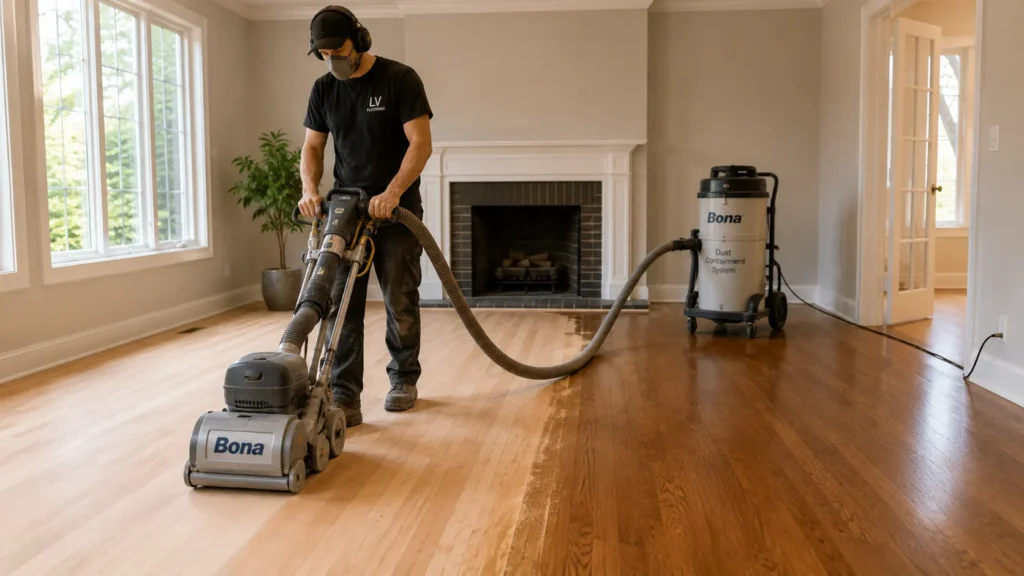
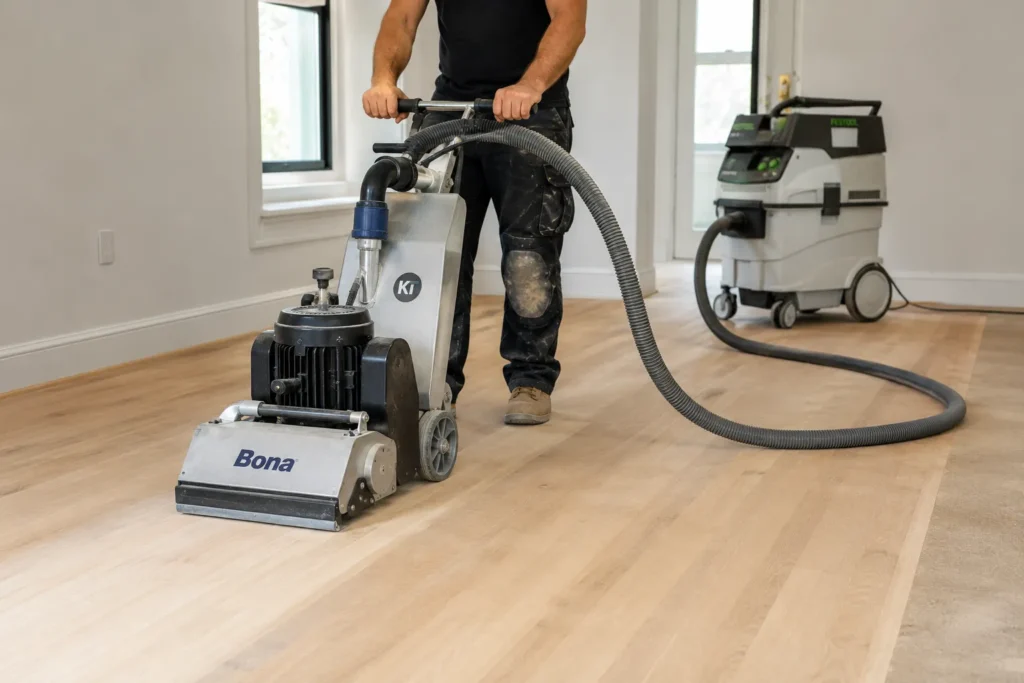
- No dust-control plan for sanding. Modern sanding should be dust-controlled. If a refinisher plans to fill your home with dust, they’re working with outdated equipment. Our refinishing service uses a dust-controlled system for exactly this reason.
- They can’t explain the difference between solid and engineered for your subfloor. If they don’t ask about your subfloor before quoting, they’re guessing.
How to actually compare quotes
Homeowners often line up three quotes and pick the lowest — which is exactly how people get burned. Compare them properly instead:
- Are they quoting the same scope? One quote may include subfloor levelling and disposal; another may not. Line them up item by item.
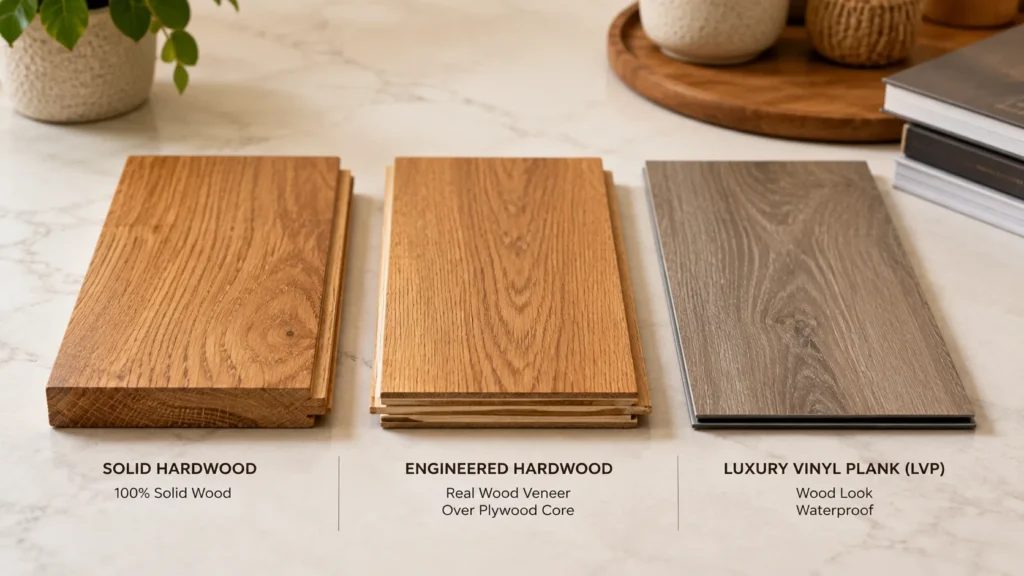
- Same material grade? “Engineered oak” can mean a 2 mm veneer or a 6 mm veneer — a huge difference in lifespan and price. Ask what wear layer you’re getting.
- Same installation method? Nail-down, glue-down, and floating aren’t interchangeable, and they cost differently.
Once you normalise for scope, material, and method, the quotes usually look very different from the raw numbers. The middle quote with the clearest scope is often the safest choice — not the lowest.
What fair 2026 pricing looks like
Knowing the going rates helps you spot a quote that’s too good to be true. As a general GTA guide for 2026:
| Service | Typical range (2026) |
|---|---|
| Hardwood materials | $4–$8 / sq ft |
| Click / floating installation | $2–$3 / sq ft |
| Glue-down / nail-down installation | $3–$4 / sq ft |
| Stair refinishing | $150–$200 / step |
⚠️ Professional Notice: Prices vary depending on project size, materials, and subfloor condition. These are general ranges, not a quote. Contact us for a free in-home estimate specific to your project.
Choosing locally matters
A contractor who works your area regularly knows the housing stock — what’s under the carpet in a 1960s North York bungalow, how a Mississauga condo board handles approvals, why a downtown Toronto heritage home needs subfloor levelling. That local knowledge shows up in fewer surprises and a cleaner result. We serve homeowners across Toronto, North York, Mississauga, Vaughan and the wider GTA from our North York showroom.
FAQ
What should I ask a flooring contractor before hiring? At minimum: are they insured and WSIB-covered, do they supply their own material, how they handle subfloor prep and acclimatisation, and exactly what the quote includes and excludes. Clear answers to all of these are a good sign.
Why is the cheapest flooring quote usually a bad idea? A very low quote almost always means something is missing — thinner material, skipped subfloor prep, no disposal, or extra charges that appear mid-project. Compare quotes by scope, material grade, and method, not just the final number.
Do flooring contractors need WSIB and insurance in Ontario? A reputable contractor should carry liability insurance and WSIB coverage. If a worker is hurt on your property and the contractor isn’t covered, you could be exposed. Always ask for proof. We provide ours on request.
How do I know if a contractor is experienced with my type of home? Ask to see recent projects in your area and how they’d approach your specific subfloor. Local installers who know GTA housing stock give more accurate quotes and fewer surprises.
Do you provide free estimates across the GTA? Yes. We offer free in-home estimates throughout Toronto, North York, Mississauga, Vaughan, Etobicoke and the wider GTA, from our showroom at 5050 Dufferin St #102, North York.
Ready to work with a contractor who does it right?
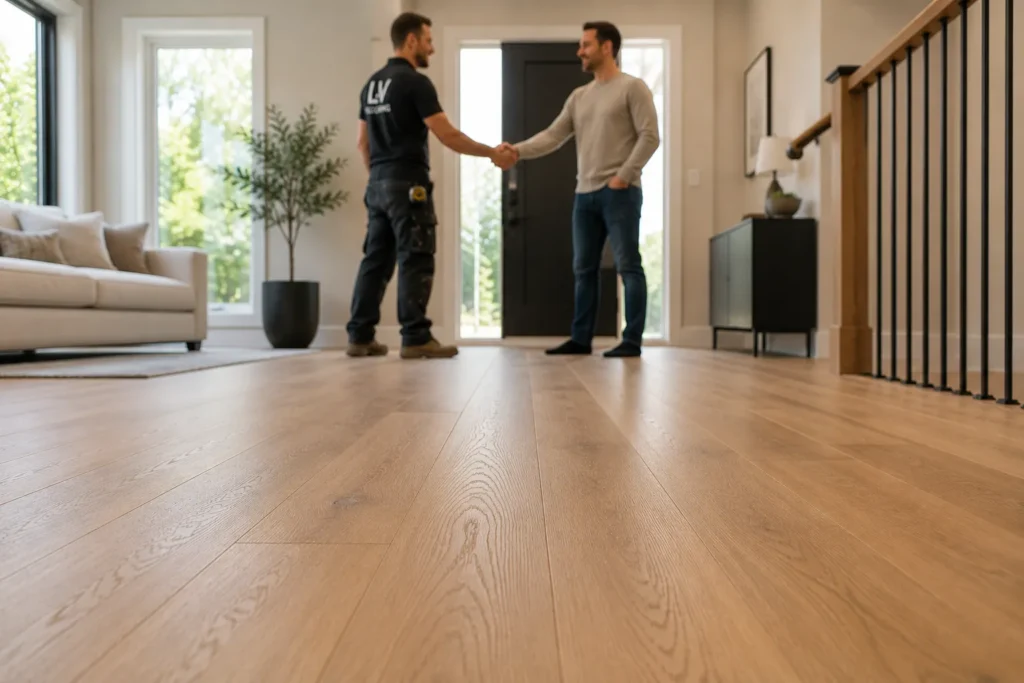
We’re a manufacturer, distributor, and installer — fully insured, WSIB-covered, and straight with you on pricing. Call (416) 665-5645 or (647) 728-1111, or request a free in-home estimate online.
📍 5050 Dufferin St #102, North York, ON M3H 5T5 🕐 Mon–Fri 9:00–18:00 | Sat 9:30–15:00