Refinish or Replace Your Hardwood Floors? How to Decide (2026)
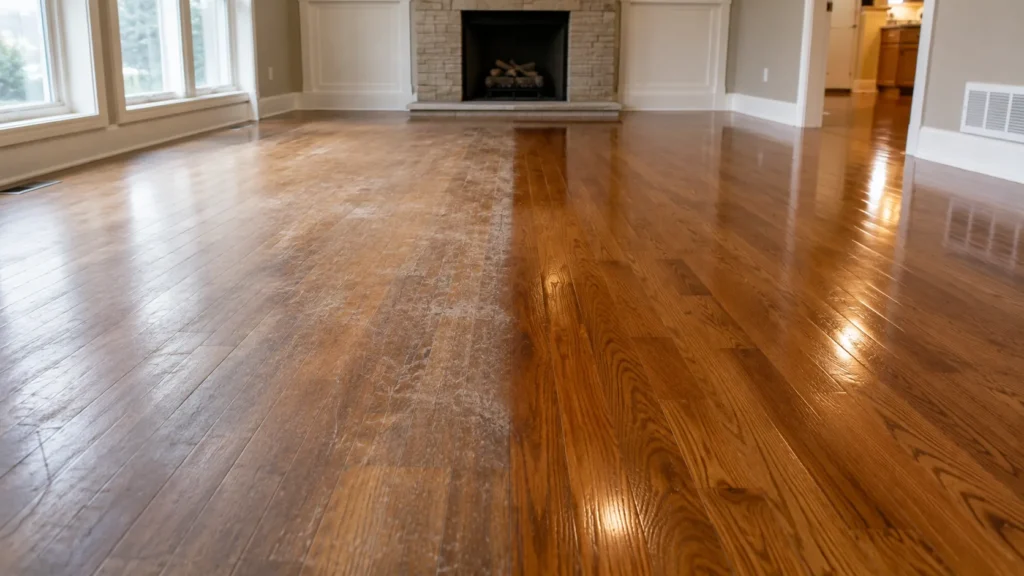
It’s one of the most common questions we get on a first visit: “Can these be saved, or do I need new floors?” The honest answer is that most hardwood floors people assume are beyond help can actually be refinished — and refinishing usually costs a fraction of replacement. But not always. Sometimes replacement really is the smarter call, and knowing the difference before you spend money is what this guide is about.
Here’s how we assess it in a real GTA home.
When refinishing is the right call
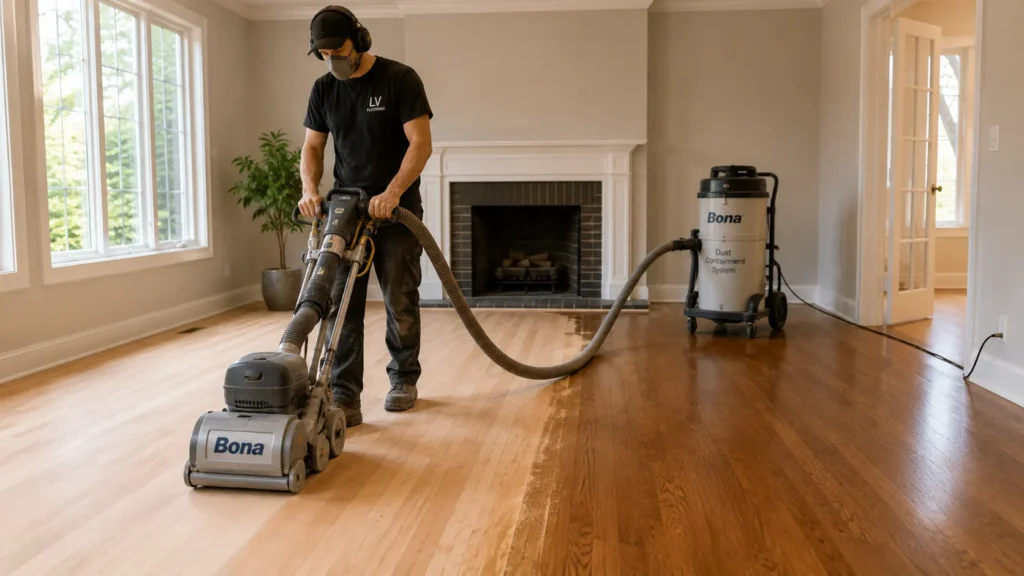
Refinishing means sanding off the old finish (and a thin layer of wood), then re-staining and sealing. If your floor is structurally sound, it’s almost always worth doing. Good candidates:
- Surface scratches, scuffs, and dull finish. These live in the finish, not the wood. Sanding removes them completely.
- Solid hardwood with enough wood left. Solid ¾” hardwood can typically be sanded and refinished multiple times over its life — often 4 to 6 times across decades.
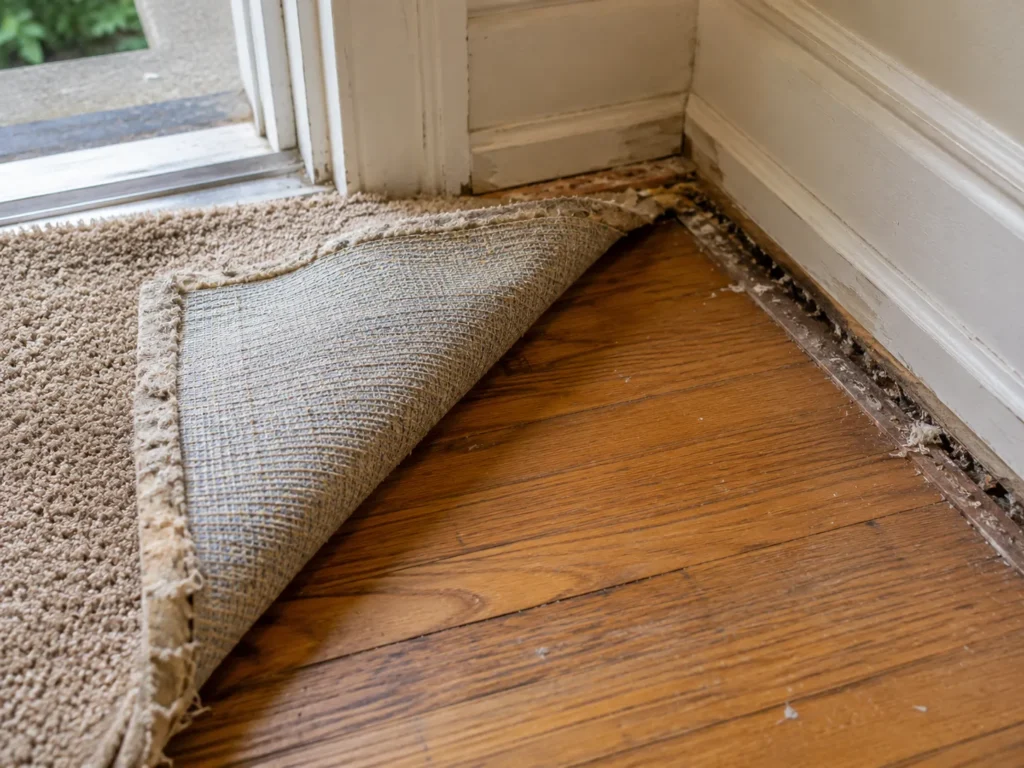
- Original hardwood hiding under carpet. This is huge in older GTA homes. We regularly pull up carpet in North York, Etobicoke, Scarborough, and older Toronto neighbourhoods and find solid red oak or maple underneath that looks rough but refinishes beautifully.
- You want a different colour. Refinishing lets you change the stain entirely — natural to deep espresso — without replacing a thing.
If this sounds like your floor, our hardwood refinishing service covers sanding, staining, and sealing with a dust-controlled process.
When replacement is the smarter move
Sometimes the wood itself is the problem, and no amount of sanding fixes that. Replace when you see:
- Water damage, rot, or mould. Warped, cupped, or blackened boards from a leak or flood can’t be sanded back to health. The affected wood has to go.
- The floor is too thin to sand again. Every refinish removes a little wood. Floors that have already been sanded several times may not have enough left above the tongue-and-groove to survive another pass. We check this before recommending anything.
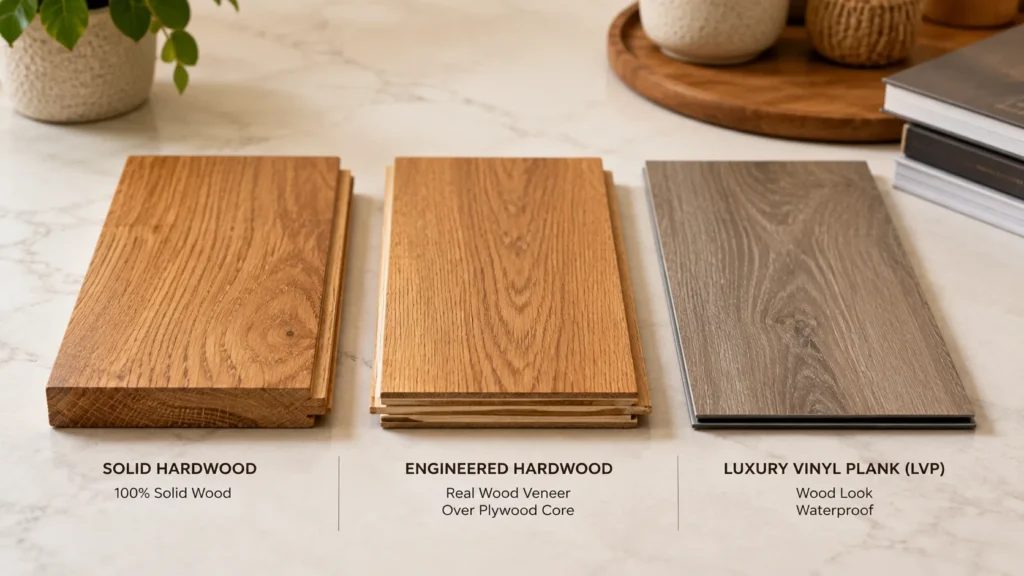
- Engineered hardwood with a worn-through veneer. Engineered floors have a real-wood top layer over a core. Thin veneers (2 mm) can usually be refinished once, if at all; once you’re through the veneer, refinishing isn’t possible and replacement is the only option.
- Deep structural damage or a failing subfloor. Large gaps, movement, squeaks from a bad subfloor, or termite/insect damage often mean the smarter fix is a fresh installation done properly.
- You’re changing the layout or species. If you’re opening up walls or want a completely different look (say wide-plank white oak instead of narrow strip oak), new flooring makes sense.
The quick test: is there enough wood left?
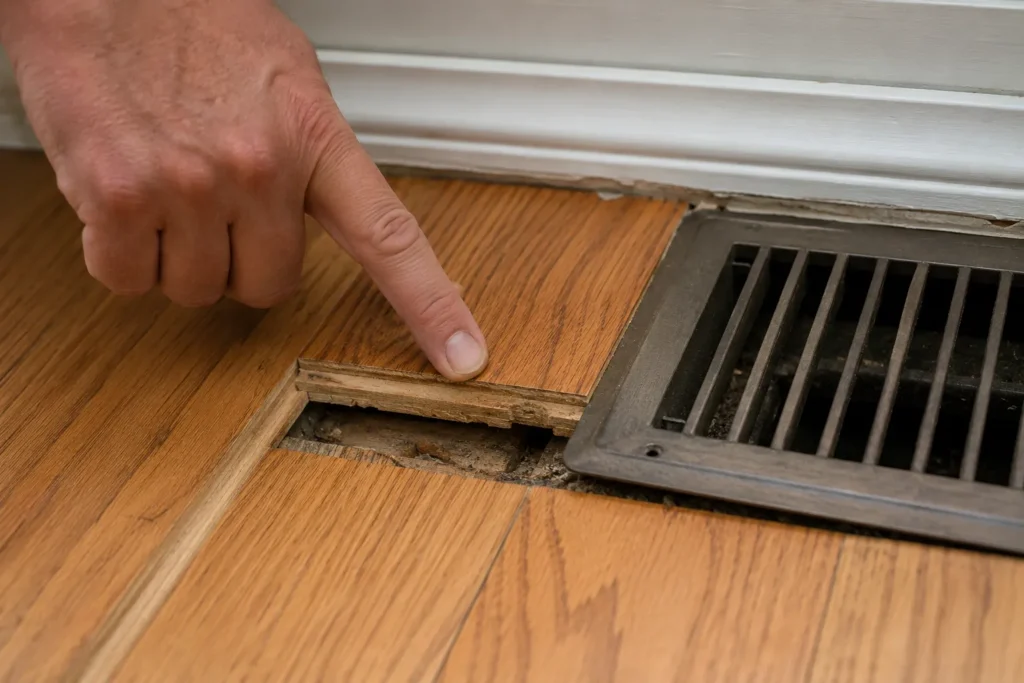
You don’t need to guess. A simple check: look at an exposed edge — near a floor vent, a doorway threshold, or where the floor meets a stair nosing. The wear layer is the wood above the tongue-and-groove joint. If there’s a healthy amount, you likely have room for at least one more refinish. If the tongue is close to the surface, the floor is near the end of its sandable life.
If you can’t tell, that’s exactly what an in-home assessment is for — we check thickness, subfloor condition, and species before recommending refinish or replace. We’d rather refinish and save you money when it’s the right call.
What it costs in 2026
The reason refinishing is so often the better choice is simple: it’s usually far cheaper than replacement, because you’re not buying new material.
| Option | General 2026 range |
|---|---|
| Sand, stain & refinish existing floors | $3–$5 / sq ft (general range) |
| New hardwood — material | $4–$8 / sq ft |
| New hardwood — installation | $2–$4 / sq ft |
| Stair refinishing | $150–$200 / step |
⚠️ Professional Notice: These are general ranges, not a quote. Final cost depends on floor condition, wood species, number of coats, and subfloor prep. Contact us for a free in-home assessment specific to your floors.
Put simply: if your floors can be refinished, you’re often looking at less than half the cost of tearing them out and starting over — with a result that can look better than new.
Why older GTA homes are worth checking
If your home was built before 1990, there’s a real chance you’re sitting on solid hardwood that just needs attention. We’ve seen floors in Cooksville, Streetsville, Willowdale, and older Toronto homes that looked like replacement candidates and came back looking brand new after a proper sanding and refinish. Before you budget for new floors, it’s genuinely worth pulling back a corner of carpet in a closet to see what’s underneath. It could save you thousands.
FAQ
Can any hardwood floor be refinished?
Most solid hardwood can be refinished several times over its life. The main limits are water/rot damage, floors already sanded down close to the tongue-and-groove, and engineered floors whose thin veneer has worn through. We assess thickness and condition before recommending anything.
Is refinishing cheaper than replacing?
Almost always. Refinishing skips the cost of new material, so it typically runs well under half the cost of replacement — and often produces a result that looks like new flooring.
How can I tell if my floor has been refinished too many times?
Check an exposed edge near a vent or threshold: if the wood above the tongue-and-groove is very thin, the floor may be near the end of its sandable life. An in-home assessment gives you a definite answer.
My floors are under carpet — are they worth saving?
Often, yes. Older GTA homes frequently have solid oak or maple under carpet that refinishes beautifully. Pull back a corner in a closet and take a look, or we can assess it for you.
Do you offer free assessments across the GTA?
Yes. We provide free in-home assessments throughout Toronto, North York, Mississauga, Scarborough, Etobicoke and the wider GTA, from our showroom at 5050 Dufferin St #102, North York.
Not sure whether to refinish or replace?
We’ll assess your floors honestly — and if they can be saved, we’ll tell you.
Call (416) 665-5645 or (647) 728-1111, or request a free in-home assessment online.
📍 5050 Dufferin St #102, North York, ON M3H 5T5
🕐 Mon–Fri 9:00–18:00 | Sat 9:30–15:00