Hardwood Flooring Over Radiant Heat: What Actually Works (2026)
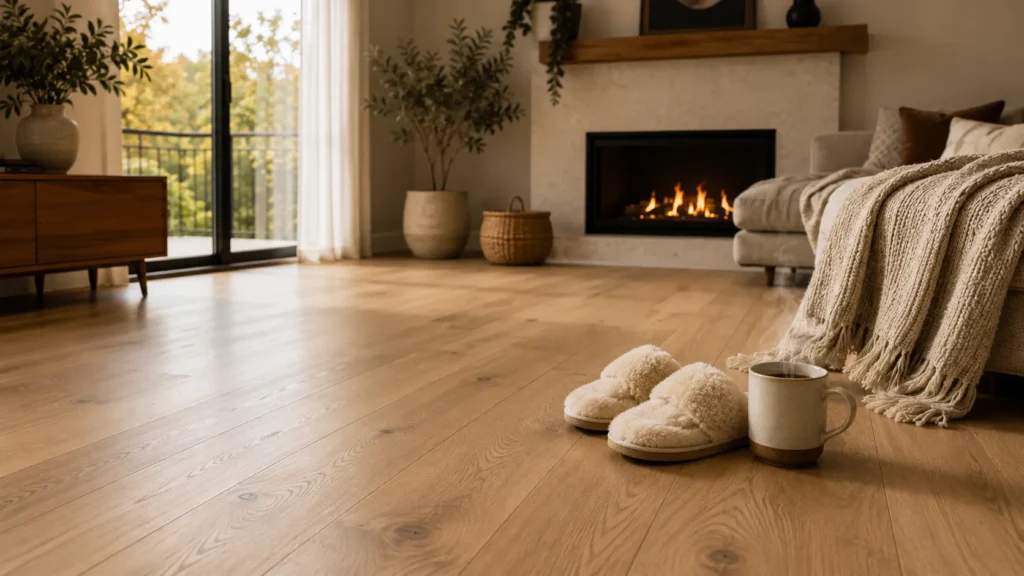
In-floor heating has become a popular feature in GTA new builds, condos, and basement renovations — and one of the first questions homeowners ask is whether they can still have a real wood floor on top of it. The good news: yes, you can. The important news: not every wood floor works over radiant heat, and getting it wrong leads to gaps, cupping, or cracked boards. Here’s what actually works, and the rules that keep a heated wood floor looking right for years.
The short answer: engineered hardwood
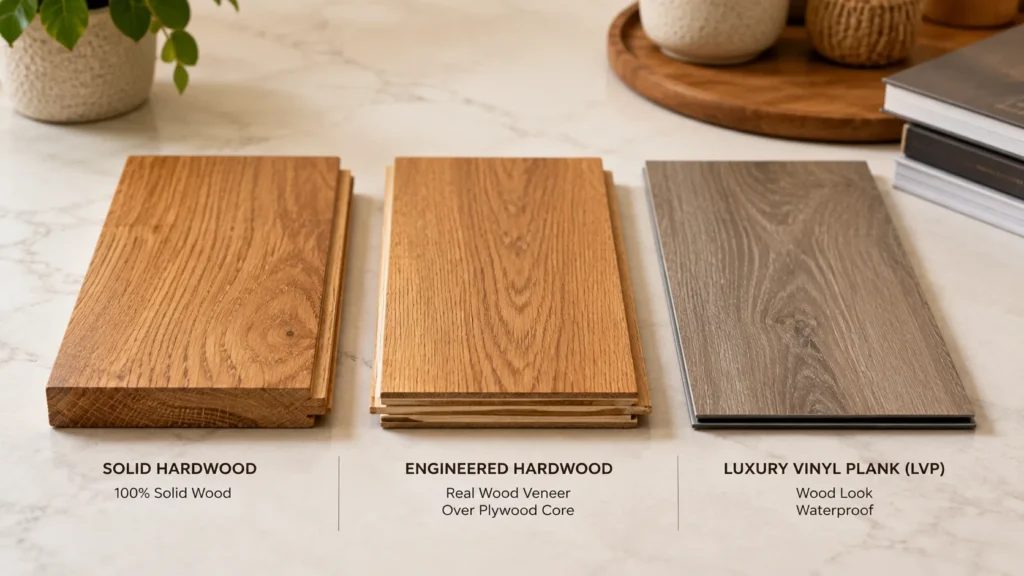
If you have radiant heat, engineered hardwood is the wood-based floor to choose. It’s not a preference — it’s about physics. Radiant heating cycles the floor through temperature changes, and wood expands and contracts in response. Solid hardwood, milled from a single piece of wood, moves the most and is generally not recommended over radiant heat: the seasonal-plus-heating movement can open gaps between boards or cause cupping.
Engineered hardwood’s multi-layer core is built specifically to resist that movement. It stays dimensionally stable through the temperature swings radiant heat creates, which is why it’s the only wood-based option we recommend over in-floor heating. Our engineered hardwood guide explains that stability in more detail, and you can see options on our engineered hardwood page.
Choose a stable species and a sensible plank width
Even within engineered hardwood, some choices handle heat better than others:
- More stable species move less with temperature and humidity, which matters more over radiant heat than over a standard subfloor. White oak, for example, is a popular, stable choice.
- Moderate plank widths are safer. Very wide planks show any movement more dramatically, so extra-wide boards over radiant heat carry more risk. A moderate width is the safer bet.
- Quality veneer and core matter — this isn’t the place for a bargain-bin engineered floor. Ask about the wear layer and the core construction.
We’ll steer you to a product and width that suits your specific heating setup.
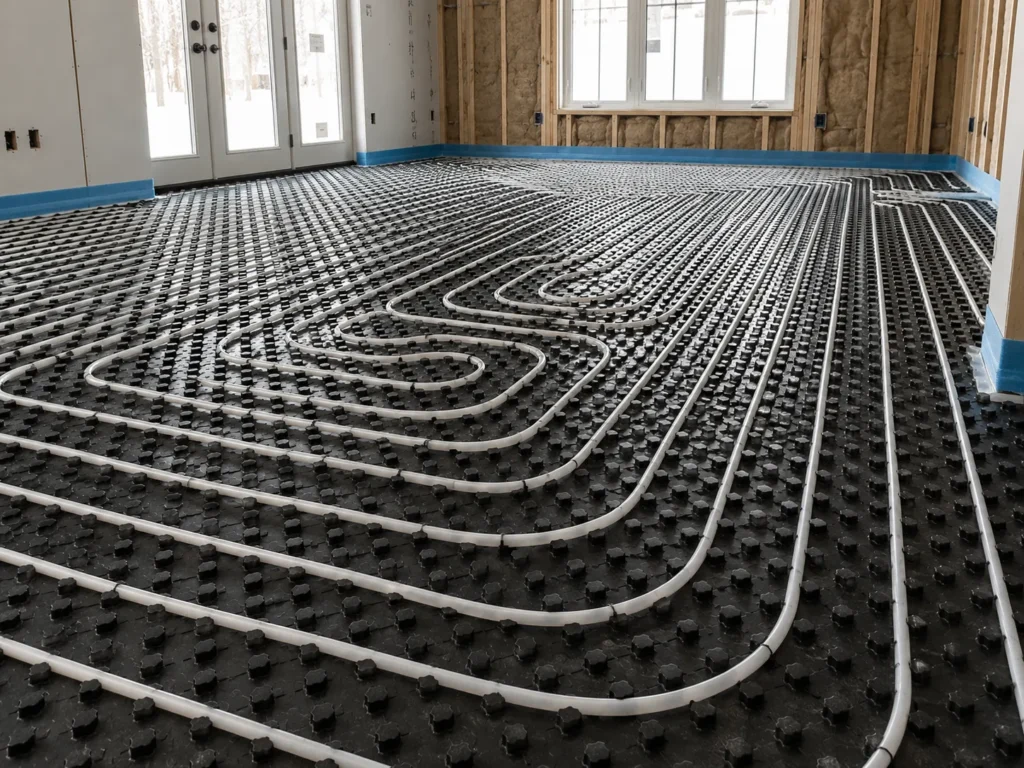
The temperature rules that protect your floor
This is where most radiant-heat floor problems actually come from — not the wood, but how the heat is run. Two rules matter most:
1. Don’t exceed the maximum surface temperature. The industry standard is to keep the floor surface at or below roughly 27°C (about 80°F). Running the system hotter than the wood is rated for is a common cause of damage. Your flooring’s manufacturer will specify the maximum — stay within it.
2. Ramp the heat up and down gradually. When you first commission the system, and at the start of each heating season, increase the temperature slowly over several days rather than all at once. Sudden temperature jumps are hard on wood. The same applies when cooling down — ease it, don’t shock it.
Following these two rules is the single biggest factor in whether a heated wood floor stays flat and gap-free.
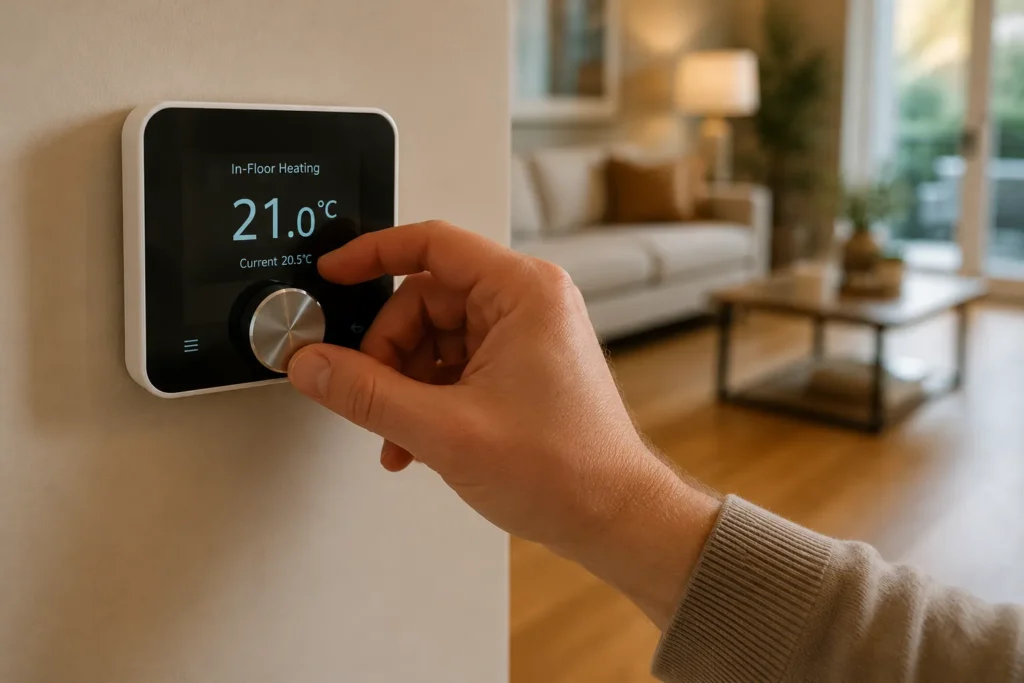
Installation method and moisture
Over radiant heat, installation details matter more than usual:
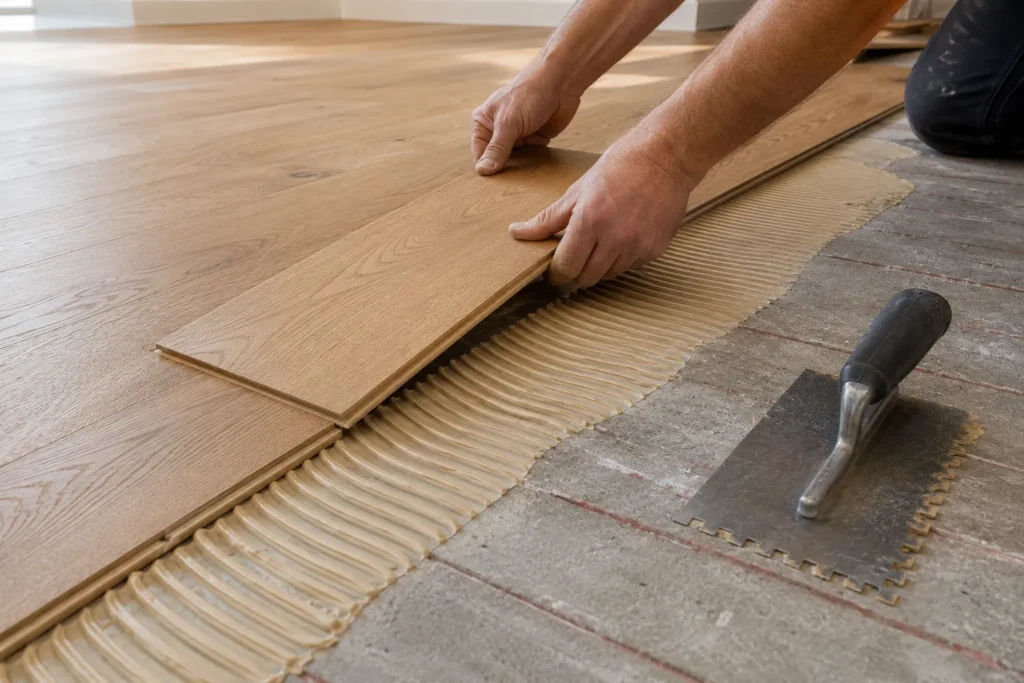
- Glue-down is often preferred because it maximises contact with the slab and transfers heat efficiently and evenly. Floating installations can also work with the right underlayment rated for radiant heat.
- Moisture testing the slab before installation is essential. Radiant systems sit in or under concrete, and installing wood over a slab that hasn’t been properly tested (and, for new concrete, fully cured) invites problems.
- Acclimatise the wood to the room before installing, as with any real-wood floor.
This is genuinely not a DIY installation — the combination of heat, moisture, and material tolerances is exactly where professional experience pays off.
What to avoid
- Solid hardwood over radiant heat. It moves too much; not recommended.
- Extra-wide planks of less stable species. More movement, more visible.
- Cranking the heat up fast. The fastest way to damage an otherwise perfect installation.
- Skipping the slab moisture test. A hidden moisture problem will surface as a floor problem.
Where this comes up in the GTA
We see radiant-heat wood floors most often in newer condos and custom builds — main-floor slabs with in-floor heating are increasingly common — and in high-end basement renovations where homeowners want warmth underfoot in a below-grade space. In both cases, engineered hardwood over a properly tested slab, run within the temperature rules, gives you real wood with the comfort of a heated floor.
2026 pricing note
| Service | General 2026 range |
|---|---|
| Engineered hardwood — material | $4–$8 / sq ft |
| Glue-down installation (on slab) | $3–$4 / sq ft |
⚠️ Professional Notice: Radiant-heat installations require product selection, moisture testing, and setup specific to your system. These are general ranges, not a quote. Contact us for a free assessment.
FAQ
Can you install hardwood over in-floor heating?
Yes — but engineered hardwood only. Solid hardwood moves too much with the temperature cycling and is generally not recommended over radiant heat. Engineered hardwood’s stable core is built for it.
Why can’t I use solid hardwood over radiant heat?
Solid hardwood expands and contracts significantly with temperature and humidity. Combined with the cycling of a radiant system, that movement can open gaps or cause cupping and cracking. Engineered hardwood stays far more stable.
What temperature should a heated wood floor be kept at?
Keep the floor surface at or below roughly 27°C (80°F), or whatever maximum your flooring manufacturer specifies, and ramp the temperature up and down gradually rather than all at once.
Is glue-down or floating better over radiant heat?
Glue-down is often preferred because it transfers heat efficiently and evenly. Floating can work with an underlayment rated for radiant heat. We recommend based on your specific slab and system.
Do you install hardwood over radiant heat across the GTA?
Yes. We install engineered hardwood over in-floor heating throughout Toronto, North York, Mississauga, Vaughan and the wider GTA, from our showroom at 5050 Dufferin St #102, North York.
Thinking about wood over a heated floor?
We’ll match the right engineered product to your heating system and install it properly.
Call (416) 665-5645 or (647) 728-1111, or request a free assessment online.
📍 5050 Dufferin St #102, North York, ON M3H 5T5
🕐 Mon–Fri 9:00–18:00 | Sat 9:30–15:00