What Thickness of Engineered Hardwood Is Best? Compare Both Measurements
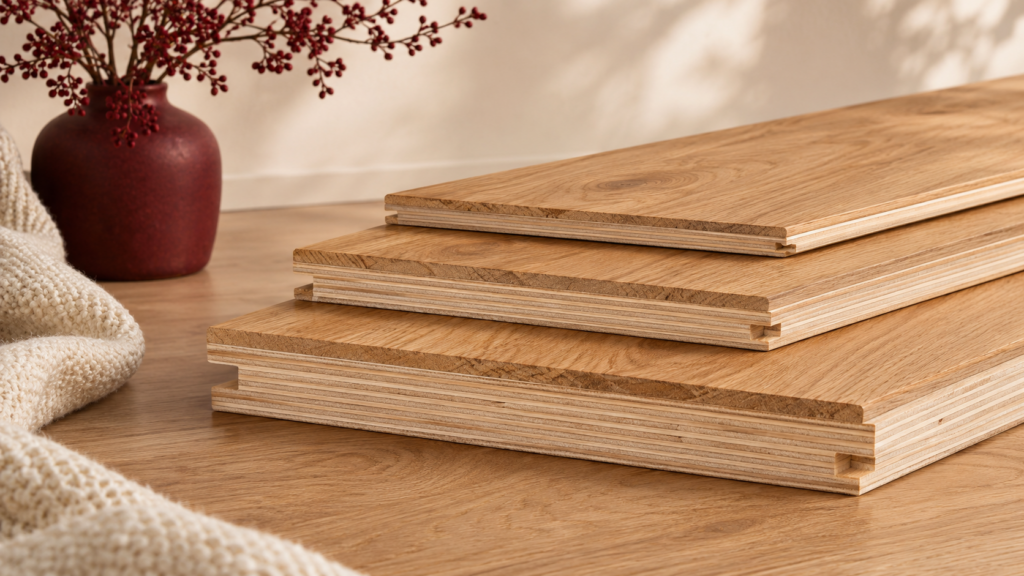
The best engineered hardwood thickness is the one that suits your installation, finished floor height and long-term plans. Do not choose by a single millimetre measurement: total board thickness and the thickness of the real-wood surface tell you different things.
Two measurements to request before comparing prices
Total thickness is the complete board, including the surface, core and backing. It affects the finished height and helps determine how the product fits into an installation system. Wear-layer thickness describes the real-wood surface above the core. It is relevant to the potential for future sanding, but it does not guarantee a fixed number of refinishes.
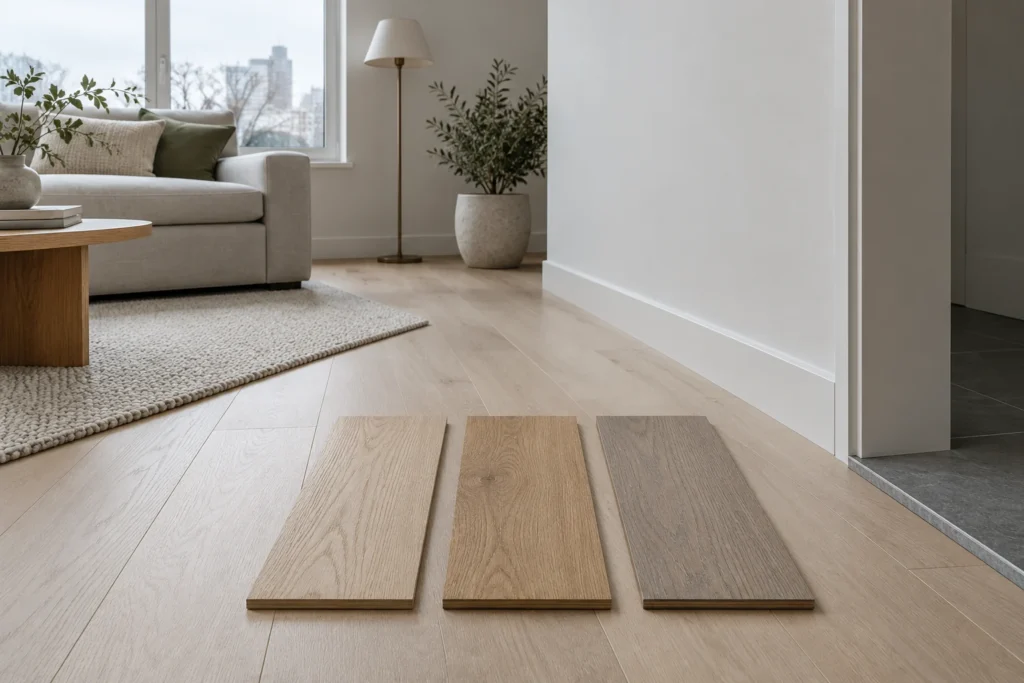
For example, two boards of equal total thickness can have different wood surfaces. Conversely, a thicker board does not necessarily give you more sandable wood. Ask for both numbers in writing for the exact collection, rather than relying on a general brand description.
Why there is no single ideal number
Engineered flooring comes in different constructions. Three-layer, two-layer and thin-veneer constructions serve different product designs. Those are not simply different sizes of the same board. The core, joint system and approved installation methods form part of the product design.
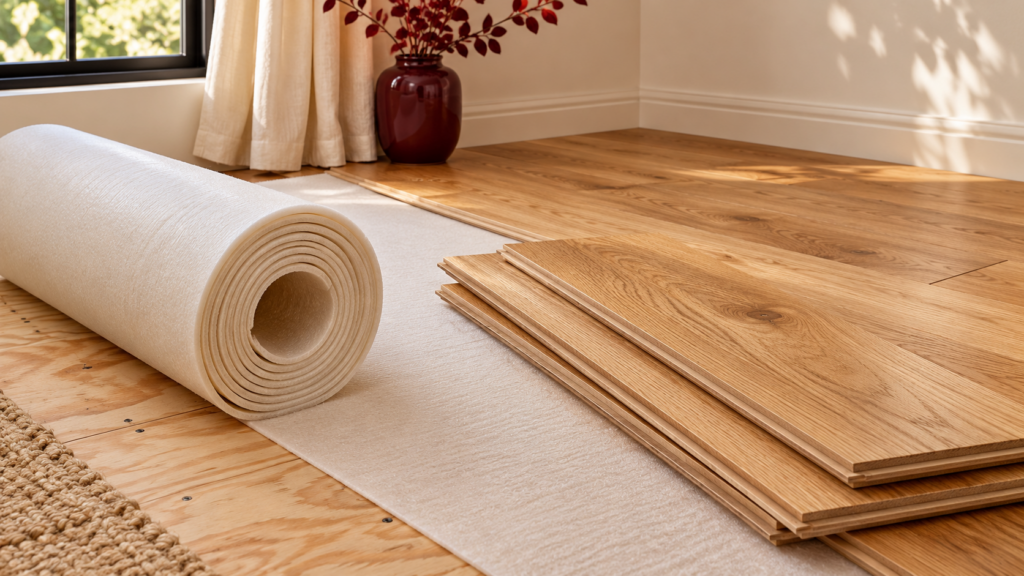
A well-specified thinner board can be a practical fit where height is restricted. A thicker product may suit another renovation, but additional thickness does not eliminate the need for a flat, sound substrate. Avoid buying a thicker floor as a substitute for subfloor preparation.
Measure the transitions before you order
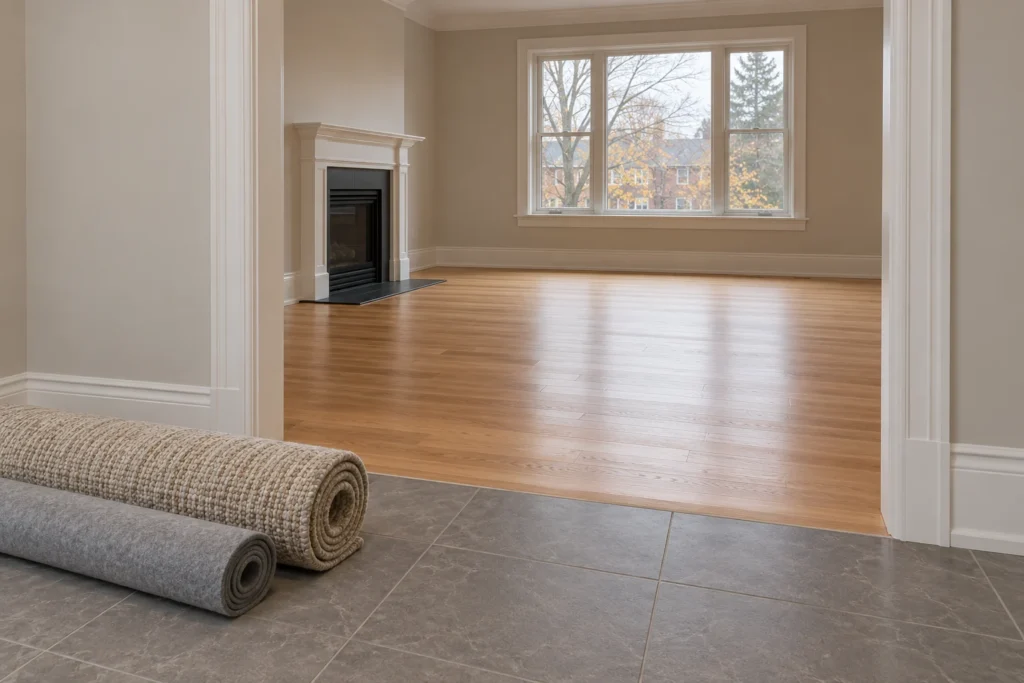
Start at the points where your new floor meets something fixed: tile, stair nosings, exterior doors, cabinets and appliances. Measure the existing assembly and calculate the replacement assembly, including any approved underlay or other layers. Check door clearance and how appliances will be removed for future service.
On stairs, a change in floor height can affect the relationship between the first or last riser and the others. Have that detail reviewed as part of the project rather than leaving the transition until installation day.
Want the option to refinish later?
Ask whether the specific product can be sanded and what the manufacturer says about refinishing. The remaining surface thickness, previous sanding, bevels, texture and condition all affect the decision. A brushed or heavily textured floor may also change appearance when refinished.
Our guide to refinishing engineered hardwood covers that decision in more detail. For a new purchase, compare the actual surface specifications and finish-care options rather than accepting a promised sanding count based only on total thickness.
Compare the whole product, not just the cross-section
- Installation: Is your intended method approved?
- Location: Is the board suitable for the room and substrate?
- Climate: Can you maintain the specified temperature and humidity?
- Heating: If relevant, is the exact product approved over your radiant system?
- Surface: Does its texture, sheen and care routine suit daily life?
Engineered hardwood is still wood. A thicker board does not make it waterproof or remove seasonal movement.
A better showroom question
Instead of asking only for “the thickest engineered floor,” bring your transition measurements and explain whether future refinishing matters to you. At LV Hardwood Flooring, those details help narrow the comparison to products that fit the project, rather than paying for thickness that does not solve your actual problem.
Tag