Can Engineered Hardwood Floors Be Refinished?
Yes, some engineered hardwood floors can be refinished. The decision depends on the remaining wood wear layer, the product’s instructions and the condition of the installed floor. A worn surface does not automatically mean you need a replacement, but it is not enough evidence to book sanding either.
For a Toronto or GTA homeowner, the useful first step is to establish which treatment the floor can accept. This guide explains what to check before comparing quotes for engineered hardwood refinishing.
Start with the exact flooring product
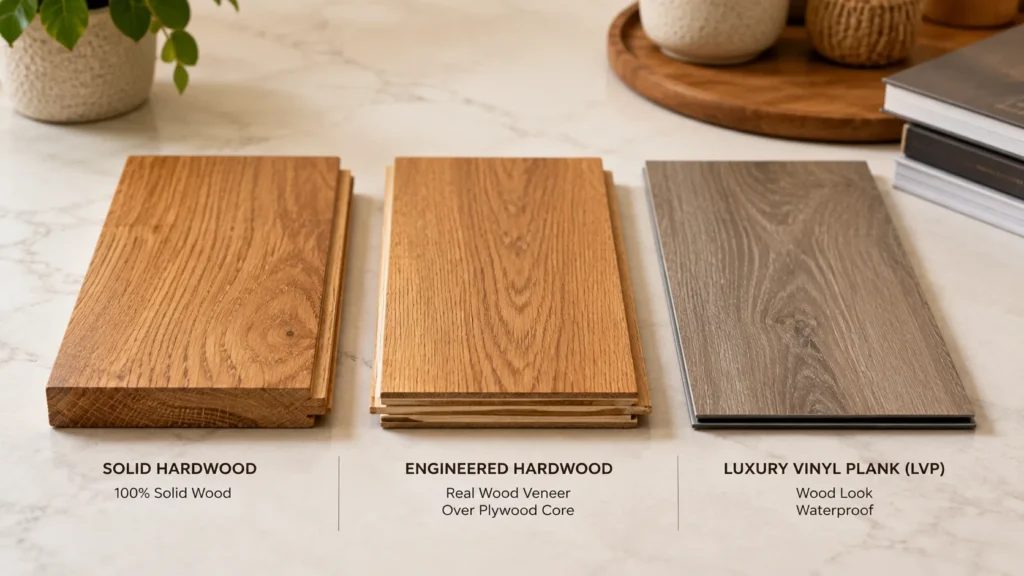
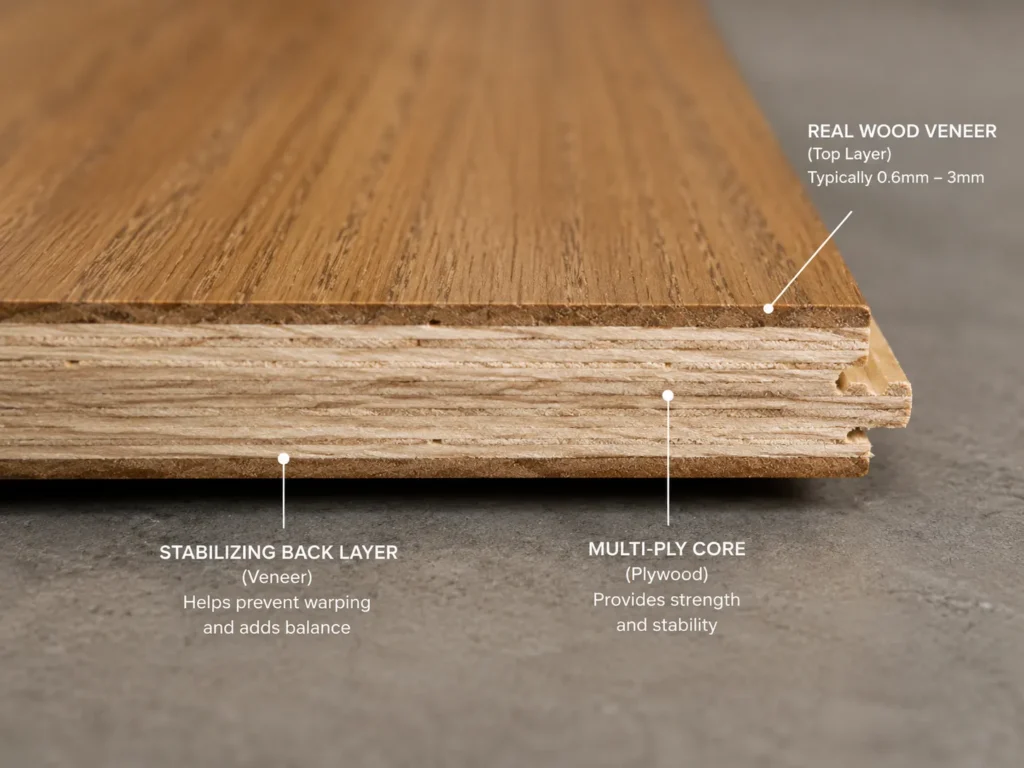
Engineered hardwood has a real wood surface over a supporting core. The total plank thickness includes those supporting layers, so a thick board does not necessarily have a thick sandable surface. Look for the manufacturer, collection and product code on an invoice, carton or spare board.
Product names matter. For example, Mirage’s product FAQ distinguishes its sandable floors from its Lock flooring. A statement about one collection should not be applied to every engineered floor, even within the same brand.
If you cannot identify the product, tell the contractor before requesting a firm sanding quote. Photographs help explain the condition; they do not establish how much usable wood remains.
Check the remaining wear layer
The wear layer is the wood surface available above the core. Its original specification is a starting point. Previous sanding and the present condition also need assessment.
The NWFA Engineered Wood Flooring Refinishable Program sets minimum product eligibility requirements of 2.5 mm for factory-finished flooring and 3.2 mm for unfinished flooring. For sculpted or distressed products, the 2.5 mm measurement is at the lowest point, with individual product evaluation.
These are certification criteria for products, not permission to sand an installed floor. They do not establish its remaining thickness or how much material a particular restoration would remove. Ask the contractor to explain the assessment of your floor, including any previous refinishing.
Choose between recoating and full refinishing
The word “refinishing” is sometimes used for several different treatments. Ask for the proposed process in writing so you can compare equivalent work.
| What you are seeing | Option to assess | Main limitation |
|---|---|---|
| Dullness or light wear in the existing finish | Cleaning and a compatible maintenance recoat | The new coating must adhere to the prepared surface |
| Worn-through finish or damage that requires sanding | Full sanding and refinishing | The product and remaining wood must support the work |
| A product that cannot be sanded or an unsuitable existing floor | Product-specific maintenance, repair or replacement | Check what each option can realistically improve |
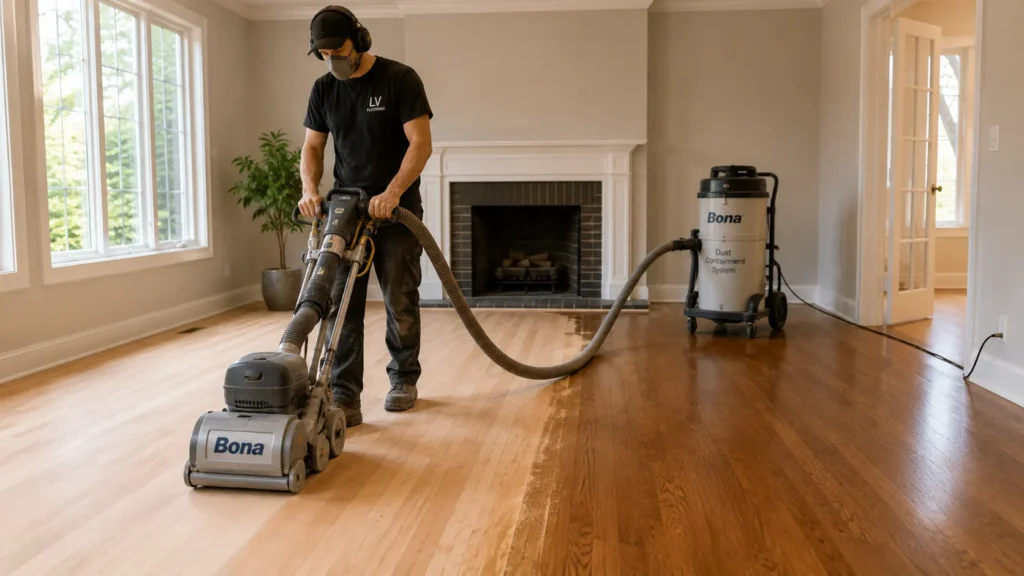
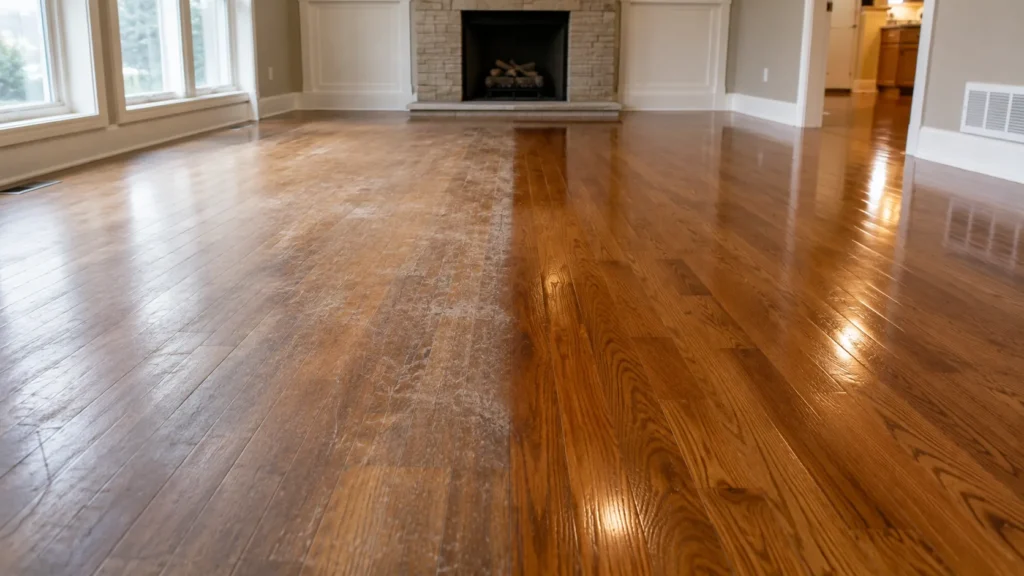
A recoat adds a new finish layer after suitable preparation. Full refinishing sands back to wood before a new finish is applied. The NWFA’s refinishing guidance distinguishes these processes and explains why the floor’s condition affects the choice.
If both restoration and replacement are realistic options, use our refinish or replace comparison to organise the wider decision.
A thin wear layer does not automatically rule out a recoat
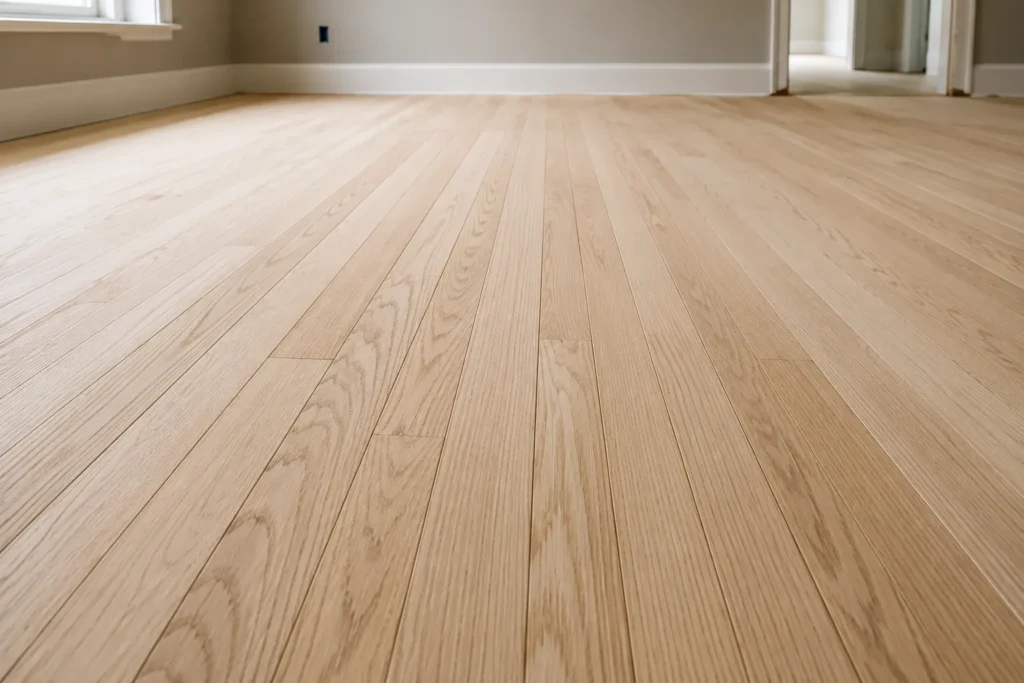
A floor that cannot tolerate full sanding may still be a candidate for a compatible recoat. That depends on its existing finish and preparation requirements.
Bona’s Recoat System technical guidance includes polyurethane-finished floors with sanding limitations. It also requires attention to contaminants and testing on hand-scraped or distressed surfaces. This is a product-specific process, not a promise that any new coating will bond to any floor.
Tell the contractor about polishes, refreshers and other maintenance products you have used. Bring the product names if available. A recoat should not be offered as a way to erase deep damage in the wood.
Investigate moisture symptoms before choosing a finish
Raised board edges or persistent gaps deserve a separate assessment. The NWFA’s moisture guidance explains how changes in moisture can cause cupping, gaps and splits. Tell the contractor about leaks or changes you have noticed through the seasons. Establish the cause before treating the appearance as a finish problem.
Discuss colour and texture before accepting a quote
If your goal is a different colour, say so at the start. Sanding back to bare wood can create an opportunity to change the stain on a suitable floor. Adding a clear maintenance coat is a different scope of work.
Ask specifically whether the existing brushed texture, bevels and colour can be retained with the proposed process. Request a sample where practical. Include any areas with different wear or appearance in that discussion. The decision should cover the result you want as well as whether the floor can accept the treatment.
What to prepare before an assessment
- The product name, invoice or any spare boards you still have.
- What you know about previous sanding, coatings and cleaning products.
- Photos showing the whole room and close views of the areas that concern you.
- Your main goal: improve surface wear, change colour or address a specific damaged area.
- The approximate area and whether the work needs to connect with adjoining rooms.
For a condo, ask management which approvals, access arrangements and permitted work hours apply before agreeing to dates. Include those requirements when requesting quotes so that the proposed work and schedule account for your building.
Compare the scope before the price
For engineered hardwood refinishing, ask each contractor to identify the process, preparation, finish system and any repair allowances. Confirm what is excluded and how unexpected findings would be handled.
If replacement is also being priced, compare the complete scope using our flooring removal and replacement cost guide. Put removal, installation and other project items alongside the refinishing quote so that you are comparing the same area and intended result.
Questions homeowners ask
How many times can engineered hardwood be refinished?
There is no reliable number for every engineered floor. Product construction, remaining wood, earlier sanding and the work now needed affect the answer. Ask about your installed floor rather than relying on a general lifespan claim.
Can I refinish engineered hardwood without sanding?
A compatible maintenance recoat may refresh an existing finish without sanding back to bare wood. It still requires preparation and a suitable surface; it is not equivalent to full sanding and refinishing.
Do I need to replace the whole floor if sanding is unsuitable?
Ask for the alternatives for your product and condition before deciding. Depending on the product, ask whether compatible maintenance or a limited repair is feasible before comparing replacement. Obtain a clear explanation of the expected appearance and limitations of each feasible option.
Discuss your floor with LV Flooring
For a Toronto or GTA project, review our hardwood floor refinishing service and contact LV Flooring with your product details and the result you want. Start by establishing whether the existing floor is suitable for the proposed work, then compare the scope and price.
Tag