What Are the Three Grades of Hardwood Flooring? A Practical Oak Comparison
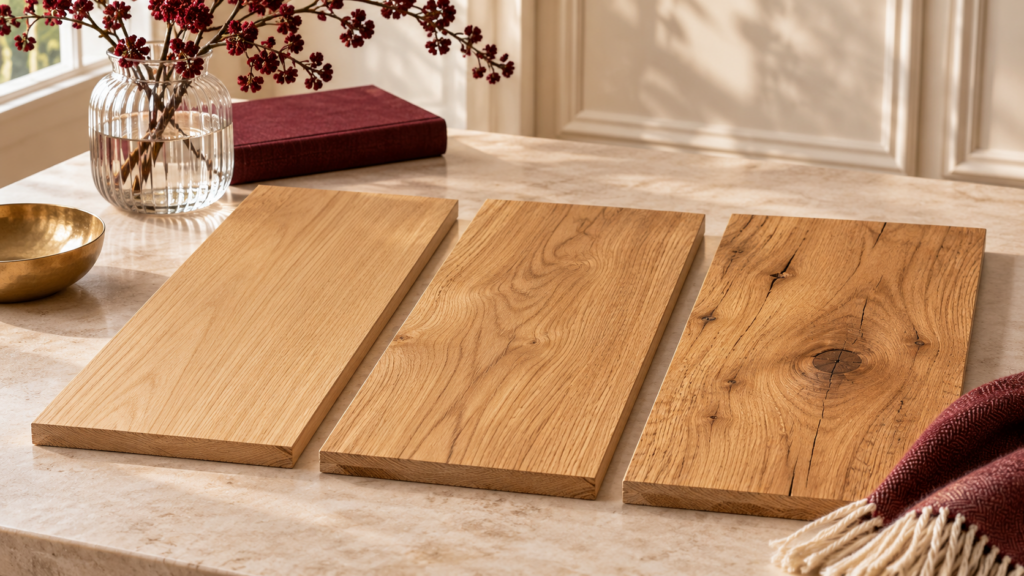
If you are comparing Select, No. 1 Common and No. 2 Common hardwood, you are mainly comparing appearance: colour variation and the natural character allowed in the boards. These familiar oak grades are not a universal three-step quality ranking for every hardwood product.
Species, grading systems and manufacturer collections vary. Some ranges use Clear, Select & Better, Character or other labels. Ask which written grading description applies to the product on your quote.
Select: a more restrained visual mix
Select oak generally has less prominent character than the common grades. It can suit a room where you want cabinetry, furniture or artwork to be the focus rather than pronounced variation across the floor. However, Select does not mean every board is identical. Natural wood still varies, and an approved sample should show a realistic range.
The useful question is how Select compares with the character you would accept across a whole room, not whether one small sample looks flawless.
No. 1 Common: more visible natural character
No. 1 Common offers more noticeable colour and grain variation and allows more character than Select. That can make a large floor feel lively without needing a dramatic stain. It can also work well when a deliberately varied floor is part of the design.
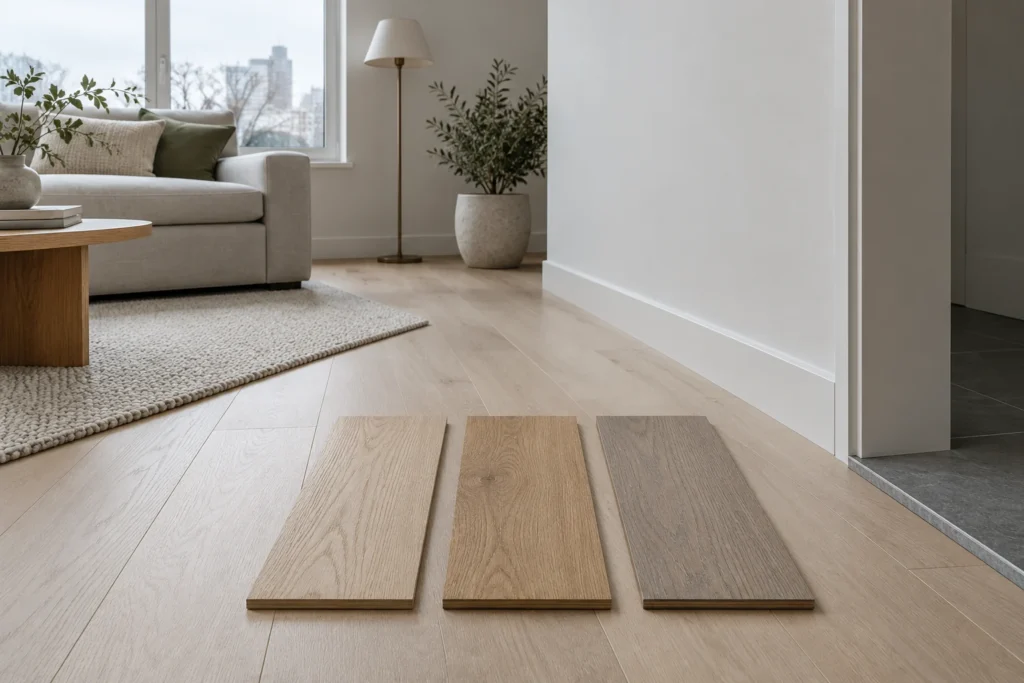
Do not decide from one attractive plank. Lay several boards side by side so you can judge the contrast between neighbouring pieces. Look at the strongest variation, not only the quietest sample, before deciding whether the grade suits you.
No. 2 Common: a stronger rustic appearance
No. 2 Common permits more pronounced character. Choose it because you like that visual range, not simply because you expect to discard every board with a knot or strong colour change. Sorting out the defining character of a grade can create unnecessary waste and leave too little material for the room.
The applicable grading rules still matter. “Rustic” is not permission for any defect whatsoever, and a marketing label is not a substitute for the supplier’s specification.
What grade does not tell you
- Scratch resistance: Compare the species and finish separately.
- Construction: A grade label does not tell you whether a board is solid or engineered.
- Moisture suitability: Check the product’s installation and environmental requirements.
- Cut: Rift-sawn and quarter-sawn describe how wood is cut, not simply a higher appearance grade.
- Maintenance: A restrained grain pattern does not remove the need for routine care.
It is perfectly reasonable to prefer a more characterful grade in an expensive renovation. The best visual choice is not automatically the one with the fewest natural marks.
Approve a range before ordering
Ask to see a display large enough to represent variation. Review it with your cabinet colour, wall paint and lighting. If filled knots, darker streaks or pale boards would bother you, point them out specifically and ask whether they are allowed in the chosen product.
Put the manufacturer, collection, species, grade, colour and finish on the order. Confirm the inspection process before installation and how unsuitable boards will be handled. The installer should not have to guess which natural characteristics you expected to see.
At LV Hardwood Flooring, bring photos of the room and examples of floors you like. Comparing the full character range is much more useful than choosing a grade name in isolation.
Tag