Solid vs Engineered vs Vinyl: How to Choose the Right Floor for Your GTA Home (2026)
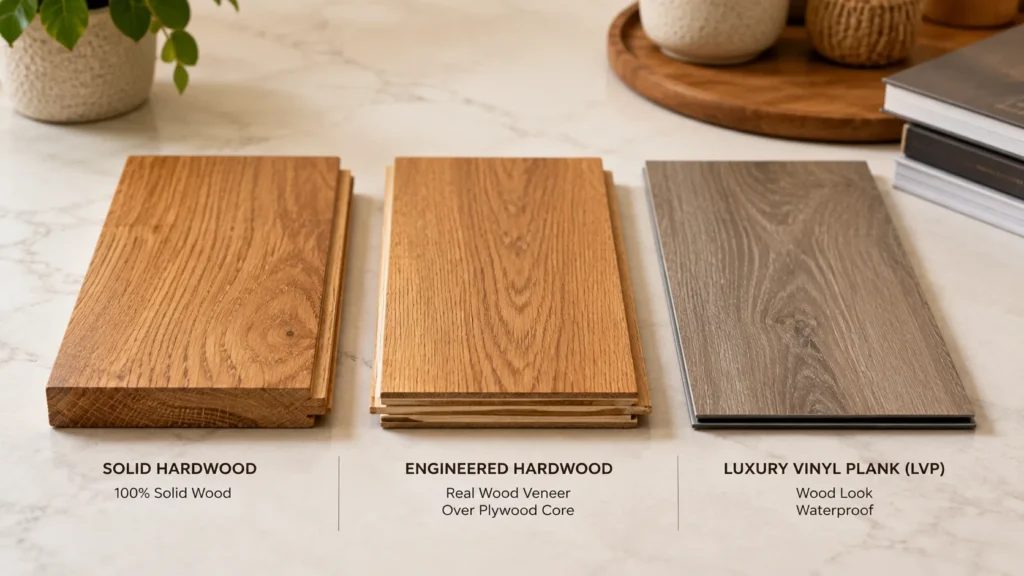
Walk into any flooring showroom and you’ll be shown three families of product that all look like wood: solid hardwood, engineered hardwood, and luxury vinyl plank. They can look nearly identical on the surface, but they behave completely differently once installed — and the “best” one genuinely depends on your subfloor, your room, and how you live. There’s no single right answer for a whole house. The right approach is to match the material to the space. Here’s how we think it through.
Solid hardwood: the classic, with conditions
Solid hardwood is exactly what it sounds like — a plank milled from a single piece of wood, typically ¾” thick. It’s the gold standard for main-floor living spaces, and its biggest advantage is longevity: it can be sanded and refinished multiple times over decades, which is why so many older GTA homes still have their original oak.
Best for: above-grade main floors and bedrooms with a plywood subfloor, in homes where you want a floor that lasts generations and can be refinished.
Not for: concrete slabs, basements, or condos — solid hardwood needs to be nailed to a wood subfloor, so it can’t go over concrete.
The catch: it’s the most sensitive to humidity. In Toronto’s dry winters and humid summers, solid wood moves the most, so proper acclimatisation and humidity control matter.
Red oak and hard maple are the most popular species locally. If solid hardwood suits your space, our service-area pages cover what works in different GTA neighbourhoods.
Engineered hardwood: the versatile all-rounder
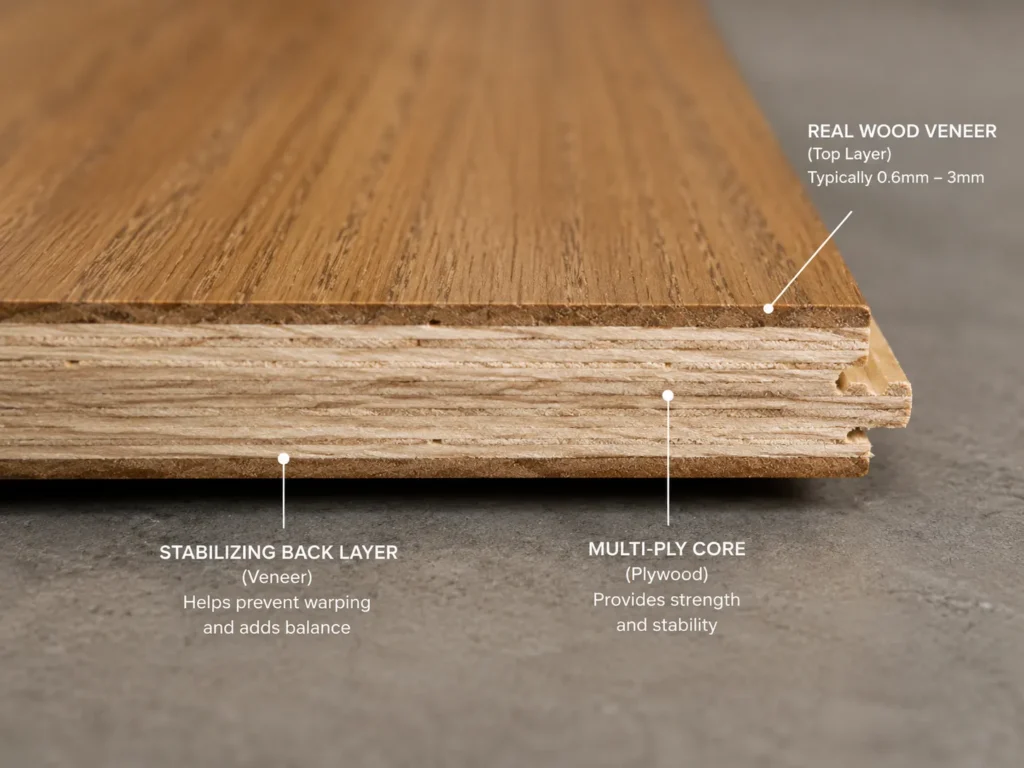
Engineered hardwood has a real-wood veneer on top of a stable, multi-layer core. You get the exact look and feel of solid hardwood — because the surface is hardwood — but the layered construction stays flat where solid wood would move. That stability is why it’s become the default for so many GTA projects. Our engineered hardwood guide goes deeper on why it handles Ontario’s humidity so well.
Best for: concrete slabs, condos, basements, radiant-heated floors, and open-concept main floors where you want real wood with less seasonal movement.
Not for: situations where you’ll want to refinish many times over 50+ years — thin veneers can only be refinished once or twice.
The catch: veneer thickness is everything. A 2 mm wear layer and a 6 mm wear layer look identical in the box but have very different lifespans. Always ask what you’re getting.
Browse options on our engineered hardwood page.
Luxury vinyl plank (LVP/SPC): the waterproof workhorse
Vinyl plank has come a long way — modern SPC (stone polymer composite) LVP looks convincingly like wood and is completely waterproof. It’s not wood, and it can’t be refinished, but in the right spot it’s the smartest choice on the board.
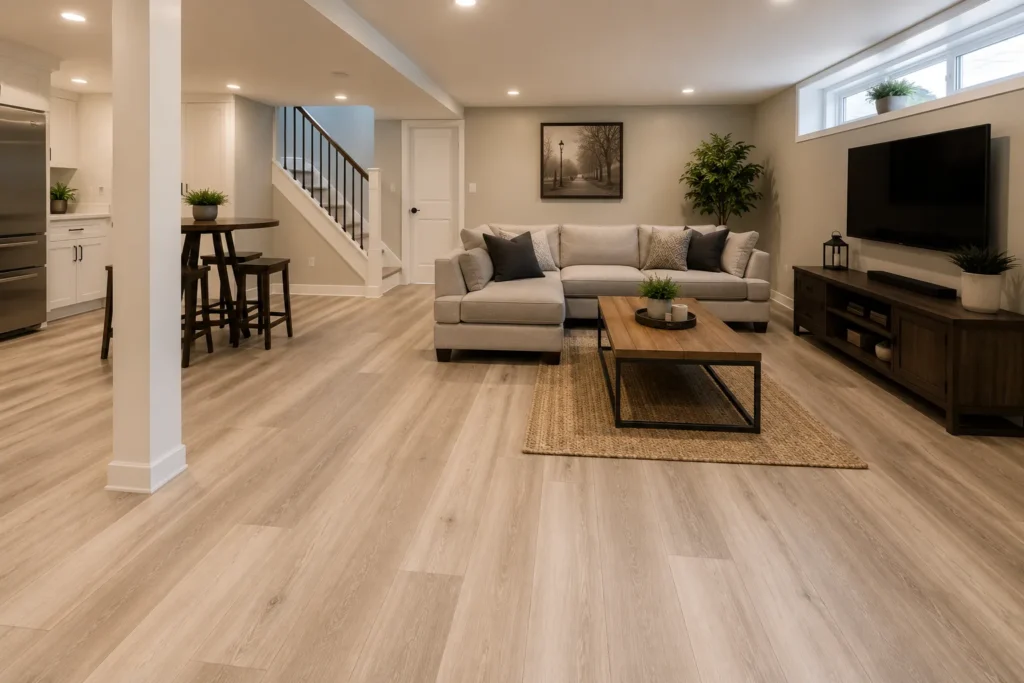
Best for: basements, laundry rooms, entryways, high-moisture areas, rental units, and busy households with kids and pets. Waterproof, scratch-resistant, and budget-friendly.
Not for: homeowners who specifically want real wood and its refinishing potential and resale appeal.
The catch: it adds less resale value than real hardwood, and a damaged plank is replaced rather than repaired.
See our vinyl flooring options. For the specific basement decision, our LVP vs. engineered for Toronto basements guide covers it in detail.
Room by room: what we’d actually recommend
The smartest homes mix materials by space:
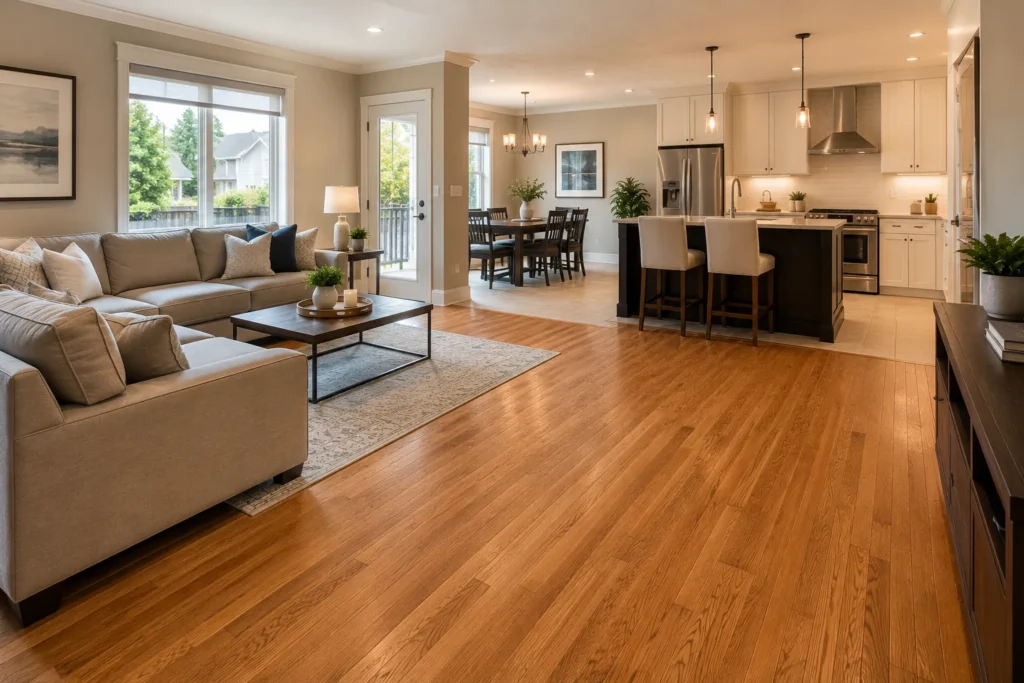
- Main floor / living areas (above grade): solid or engineered hardwood. This is where real wood earns its resale value and “wow” factor.
- Condos and slab-on-grade main floors: engineered hardwood — it’s built for concrete.
- Basements: vinyl plank (waterproof) or engineered hardwood in a dry, well-sealed space. Never solid hardwood below grade.
- Bedrooms: engineered or solid hardwood; vinyl or laminate is a fine budget choice for secondary bedrooms.
- Entryways, laundry, high-moisture zones: vinyl plank for its waterproofing.
- Radiant-heated floors: engineered hardwood — the only wood-based option that reliably handles the temperature changes.
Why GTA climate tips the scale
Toronto’s climate is hard on flooring: bone-dry winters with forced-air heat, humid summers, and big swings in between. Solid wood reacts to those swings the most, which is why engineered hardwood keeps winning for slab and condo installs, and why proper acclimatisation matters for any real-wood floor. Keeping indoor humidity in a reasonable range (roughly 35–55%) reduces movement and gaps for whichever wood you choose.
2026 pricing at a glance
| Material | Material cost (2026) | Refinishable? | Best subfloor |
|---|---|---|---|
| Solid hardwood | $4–$8 / sq ft | Yes, multiple times | Plywood (above grade) |
| Engineered hardwood | $4–$8 / sq ft | Once or twice (veneer-dependent) | Concrete or plywood |
| Luxury vinyl plank | Budget-friendly | No | Almost any, incl. concrete |
Installation runs roughly $2–$3/sq ft for click/floating and $3–$4/sq ft for glue-down or nail-down.
⚠️ Professional Notice: These are general ranges, not a quote. Final cost depends on product grade, subfloor condition, and layout. Contact us for a free in-home estimate.
FAQ
Is engineered hardwood real wood?
Yes. Engineered hardwood has a genuine hardwood veneer on top — the surface is real wood. The difference is the stable multi-layer core underneath, which keeps it flatter than solid wood in humidity swings.
Which is better, engineered hardwood or vinyl?
Neither is universally better — it depends on the room. Engineered hardwood is real wood with better resale value and refinishing potential; vinyl is waterproof and ideal for basements, moisture-prone areas, and busy households. Many homes use both.
Can I put solid hardwood in my basement or condo?
No. Solid hardwood needs a wood subfloor to be nailed down and doesn’t suit concrete slabs. For basements and condos, choose engineered hardwood or vinyl.
What’s the best flooring for a home with kids and pets?
Waterproof vinyl plank or a durable engineered hardwood with a wire-brushed finish both handle heavy traffic and spills well. Wire-brushing in particular hides scratches from pets.
Can you help me choose the right mix for my home?
Yes. We assess your subfloors and how you use each space, then recommend the right material room by room — across Toronto, North York, Mississauga and the wider GTA.
Not sure which floor fits your home?
We’ll look at your subfloors and your rooms and recommend the right material for each — honestly.
Call (416) 665-5645 or (647) 728-1111, or request a free in-home estimate online.
📍 5050 Dufferin St #102, North York, ON M3H 5T5
🕐 Mon–Fri 9:00–18:00 | Sat 9:30–15:00