Hickory Hardwood Flooring in Toronto: Is It Right for Your Home?
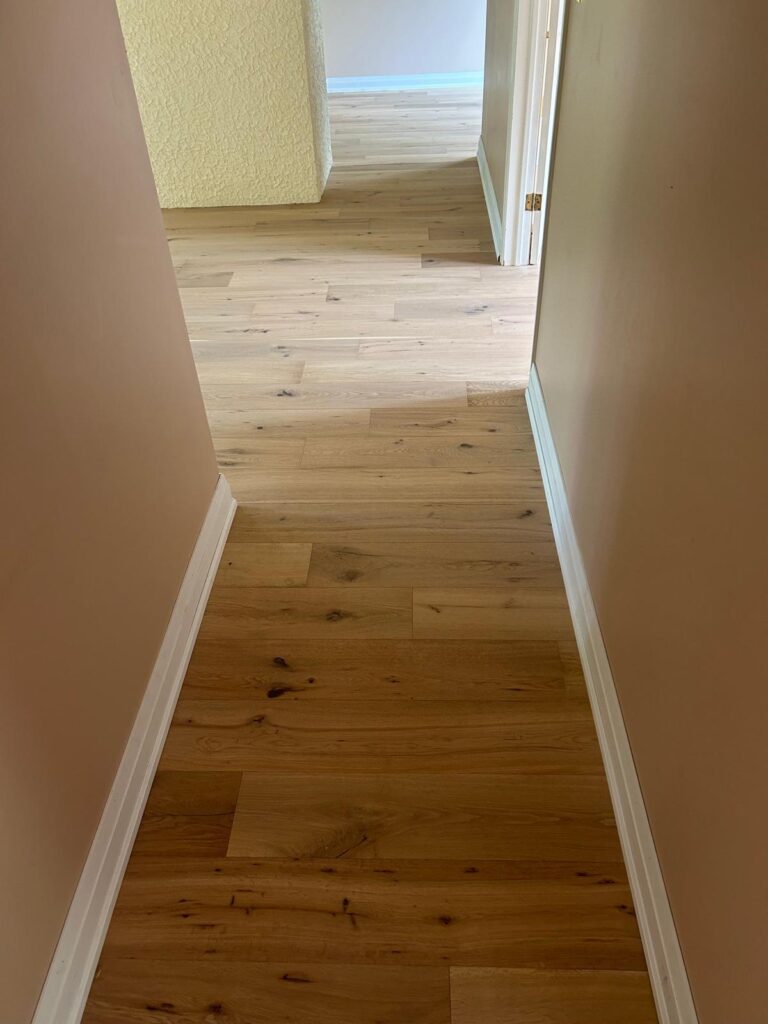
Hickory is one of those flooring species that divides opinion. Some Toronto homeowners fall for it immediately — the dramatic colour variation, the bold grain, the raw energy of it. Others find it too busy, too rustic, or difficult to style around. Both reactions are valid, and both are reasons to understand exactly what hickory delivers before committing to it.
This guide covers what makes hickory different from red oak, maple, and white oak, how it performs in Toronto’s climate, which spaces it suits, and what it actually costs in 2026.
What Makes Hickory Hardwood Different
Hickory (Carya species) is a North American hardwood that grows primarily in the eastern United States and parts of southern Ontario. It’s best known for two things: exceptional hardness and dramatic visual variation.
Hardness. On the Janka hardness scale, hickory scores between 1,820 and 2,140 — significantly harder than red oak (1,290), white oak (1,360), and maple (1,450). For Toronto homeowners with active households, large dogs, or high-traffic living areas, that difference is tangible. Hickory resists dents and surface scratches better than any common domestic hardwood species.
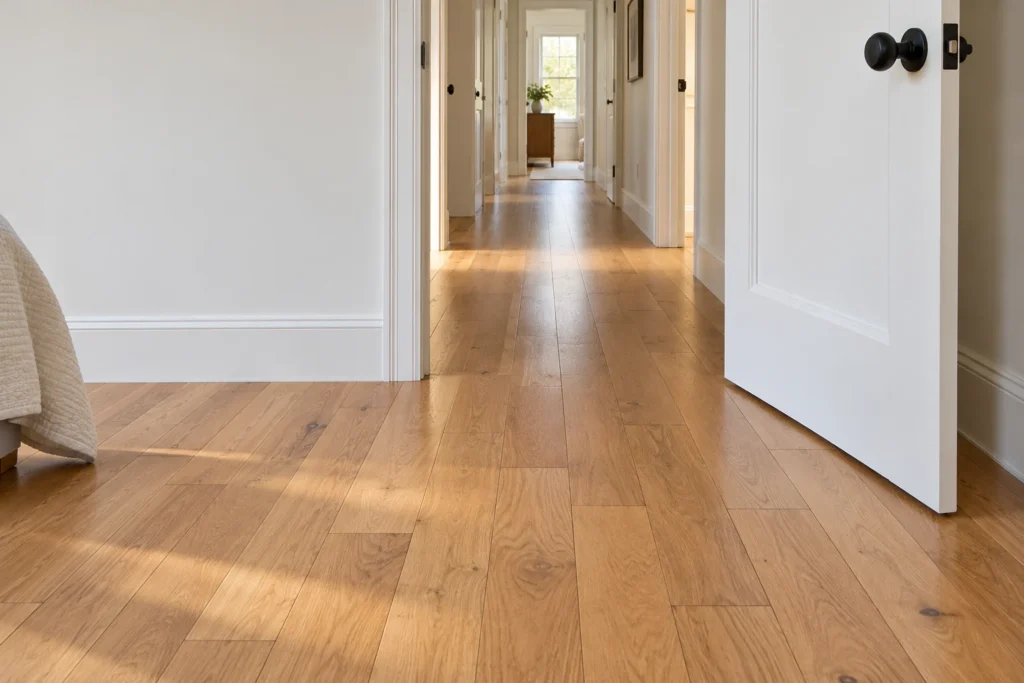
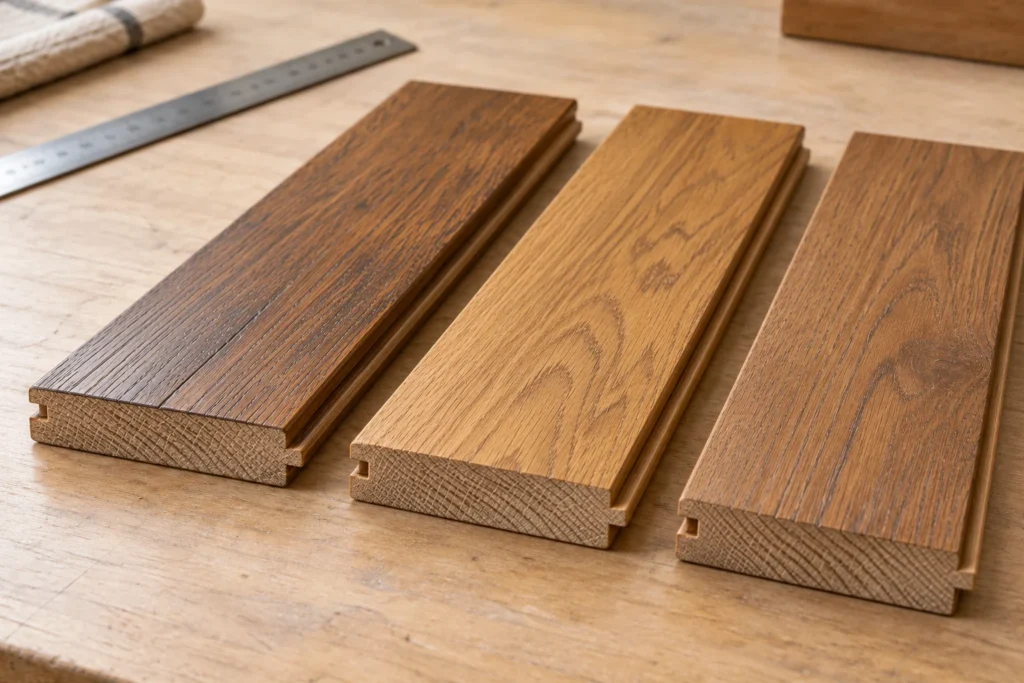
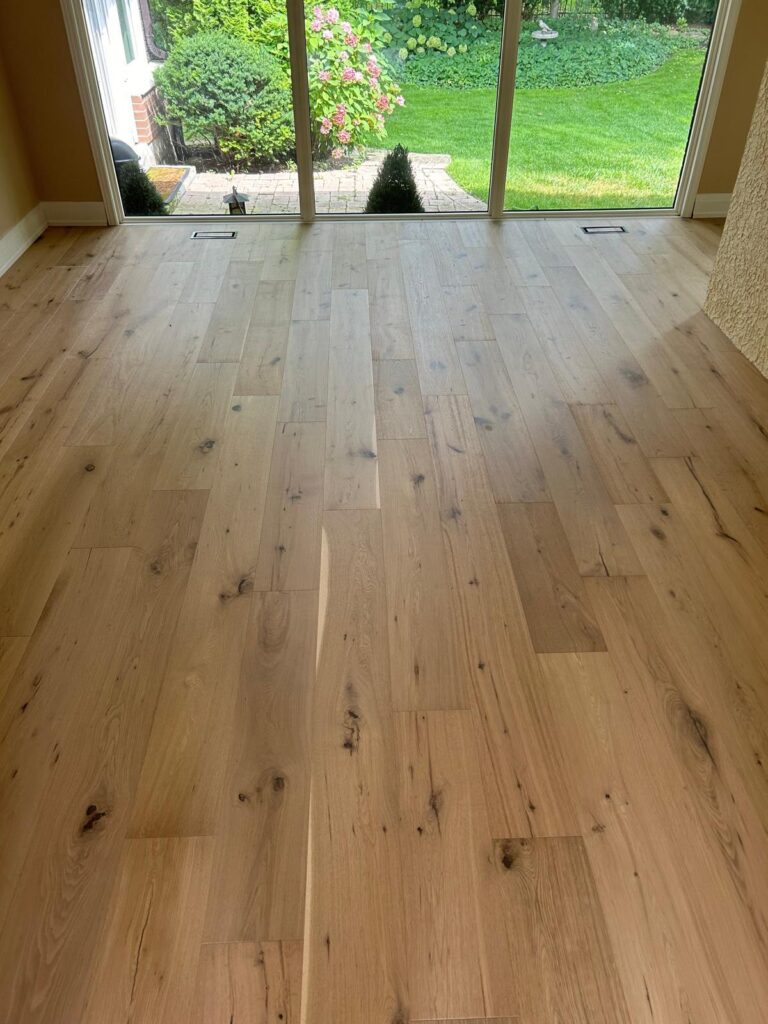
Colour variation. Hickory’s most distinctive characteristic is the contrast between its heartwood and sapwood. The heartwood ranges from tan to reddish-brown; the sapwood is creamy white or pale yellow. These tones often appear within the same plank — which creates a floor with significant natural contrast. Some homeowners love the drama. Others find it too variable for a cohesive interior.
Grain character. Hickory grain is typically straight with occasional waves and figures. It’s tighter and less pronounced than oak grain, which gives it a somewhat different visual texture — busier in terms of colour but smoother in terms of grain pattern.
Engineered vs. Solid Hickory in Toronto
Toronto’s climate creates real challenges for solid hardwood — forced-air heating in winter drops indoor humidity significantly, while summer brings sustained humidity. Hickory is particularly sensitive to moisture movement: it absorbs moisture faster than other domestic species and shrinks more noticeably during the drying season.
For most Toronto installations, engineered hardwood flooring in hickory format is the more practical choice:
- The cross-ply core stabilises the hickory face against seasonal movement
- Can be glued down over concrete subfloors — relevant for condos and main-floor slabs
- Available in wider plank formats without the cupping risk that affects solid wide-plank hickory
- The real hickory veneer delivers the same visual character as solid
Important note on acclimatisation: Unlike most hardwood species, hickory should typically not be acclimatised before installation. Because hickory absorbs ambient moisture so readily, extended acclimatisation in a Toronto home — especially during dry winter months — can cause the wood to shrink before it’s even installed. Always follow the manufacturer’s specific guidelines for the product you’re purchasing.
At LV Hardwood Flooring, our hickory collection is available in engineered format through the Artisan Collection — lightly hand-scraped and distressed to enhance the natural character of the species.
Hickory Hardwood Costs in Toronto (2026)
⚠️ Pricing disclaimer: All figures below are approximate 2026 GTA market ranges. Final costs depend on subfloor condition, square footage, installation method, and product selection. Contact LV Hardwood Flooring for an accurate quote.
| Item | Typical Cost |
|---|---|
| Engineered hickory (materials) | $4–$8/sq. ft. |
| Glue-down installation | $3–$4/sq. ft. |
| Click/floating installation | $2–$3/sq. ft. |
| Subfloor prep (if needed) | $1–$3/sq. ft. |
For a typical 500 sq. ft. Toronto main floor, total installed cost lands between $3,500 and $5,500 depending on subfloor condition and installation method.
Hickory vs. Other Hardwood Species: Quick Comparison
| Species | Janka Hardness | Colour Character | Best For | Price Range (materials) |
|---|---|---|---|---|
| Hickory | 1,820–2,140 | High contrast, dramatic | Active homes, rustic/organic interiors | $4–$8/sq. ft. |
| Red Oak | 1,290 | Warm amber, moderate grain | Traditional Toronto homes | $3–$6/sq. ft. |
| White Oak | 1,360 | Neutral, clean grain | Contemporary, Scandinavian interiors | $4–$8/sq. ft. |
| Hard Maple | 1,450 | Light, uniform | Modern, minimalist spaces | $4–$7/sq. ft. |
| Black Walnut | 1,010 | Dark, luxurious | Premium living rooms, bedrooms | $5–$9/sq. ft. |
Where Hickory Works Best in Toronto Homes
Active family homes. Hickory’s hardness makes it the practical choice for households with children, large dogs, or anyone who wants a floor that shrugs off daily punishment. In a busy North York or Etobicoke detached home, hickory outperforms oak and maple where wear resistance matters most.
Open-concept living and dining areas. The colour variation in hickory works best in larger spaces where the eye can take in the full range of tones. In a small room, the contrast can feel busy and overwhelming.
Farmhouse and organic interiors. Hickory’s natural drama suits interiors with warm wood tones, natural textiles, and organic materials. It pairs well with linen, leather, and matte-finish cabinetry in warm greys or whites.
Heritage and older Toronto homes. Pre-1960s homes in neighbourhoods like The Annex, Leslieville, and Rosedale often have bold architectural character that hickory complements naturally. The species has a sense of history and authenticity that suits these spaces well.
What to Consider Before Installing Hickory in Toronto
Light levels matter. Hickory’s high colour contrast reads very differently in well-lit rooms versus darker north-facing spaces. In a room with limited natural light, the pale sapwood tones can feel cold. Pair hickory with warm artificial lighting and warmer wall colours to balance the effect.
Humidity management is critical. More than most species, hickory needs stable indoor humidity — ideally 35–50% year-round. Toronto winters regularly drop indoor humidity below 30% without a humidifier. If you’re installing hickory, a whole-home humidifier is a worthwhile investment that protects the floor and your health.
Staining hickory is unpredictable. Because hickory’s heartwood and sapwood absorb stain differently, applying a uniform stain colour is very difficult. The pale sapwood areas often appear much lighter than the tan heartwood, creating a blotchy result. Most flooring specialists recommend using hickory in its natural or lightly enhanced state rather than applying a heavy stain. If colour is a key concern, species with more uniform tone — red oak, white oak, or maple — give more predictable results.
Grade selection affects the look significantly. Lower grades (character grade) have more sapwood, more colour variation, and more knots. Higher grades (select/better) have tighter colour consistency. For Toronto homeowners who want the hickory look without maximum chaos, a mid-grade or select grade delivers better consistency while preserving the species’ natural appeal.
See Hickory In Person
Hickory is a species that genuinely needs to be seen in person — photographs undersell the depth of colour variation and make it difficult to judge how the floor will read in your specific room. We carry engineered hickory samples at our North York showroom.
Bring a photo of your space, your wall colour, and any furniture or cabinetry you’re working around — our team will pull the relevant samples and give you a free, no-obligation quote.
📍 LV Hardwood Flooring Showroom 5050 Dufferin St #102, North York, ON M3H 5T5 📞 (416) 665-5645 | (647) 728-1111 ✉️ [email protected]
Hours: Mon–Fri 9:00–18:00 | Sat 9:30–15:00
Get directions on Google Maps →
FAQ
Is hickory hardwood flooring a good choice for Toronto homes? Yes, particularly for active households that need durability. Hickory’s Janka hardness of 1,820–2,140 makes it the hardest common domestic hardwood available — it outperforms red oak, white oak, and maple. The trade-off is higher colour variation and more sensitivity to humidity than other species.
How does hickory compare to red oak? Hickory is significantly harder than red oak and has more dramatic colour variation. Red oak has more consistent colouring and a more pronounced grain pattern. For a traditional Toronto home where uniformity matters, red oak is easier to work with. For maximum durability and a bolder look, hickory wins.
Can hickory be stained? Technically yes, but results are unpredictable. The heartwood and sapwood absorb stain differently, often producing a blotchy appearance. Most professionals recommend leaving hickory in its natural state or applying only a light oil finish that enhances rather than masks the natural variation.
Is engineered or solid hickory better for Toronto? Engineered hickory is the better choice for most Toronto installations. Hickory is unusually sensitive to moisture movement, and Toronto’s humidity swings — from very dry winters to humid summers — make solid hickory prone to gapping and movement. Engineered format with a cross-ply core manages those swings significantly better.
How long does hickory flooring last? With professional hardwood floor installation and proper maintenance, engineered hickory lasts 20–30 years. The real wood veneer on engineered hickory can be refinished once or twice depending on thickness, extending the floor’s usable life.
Tag