Flooring Choices You Might Regret: Seven Decisions to Test Before Buying
The flooring choice you regret is often not a bad material. It is a mismatch between the floor, the room and the way you live. Before choosing a colour or chasing a sale, test the decisions that will be difficult to change once the furniture is back.
1. Choosing from a tiny sample under showroom lights
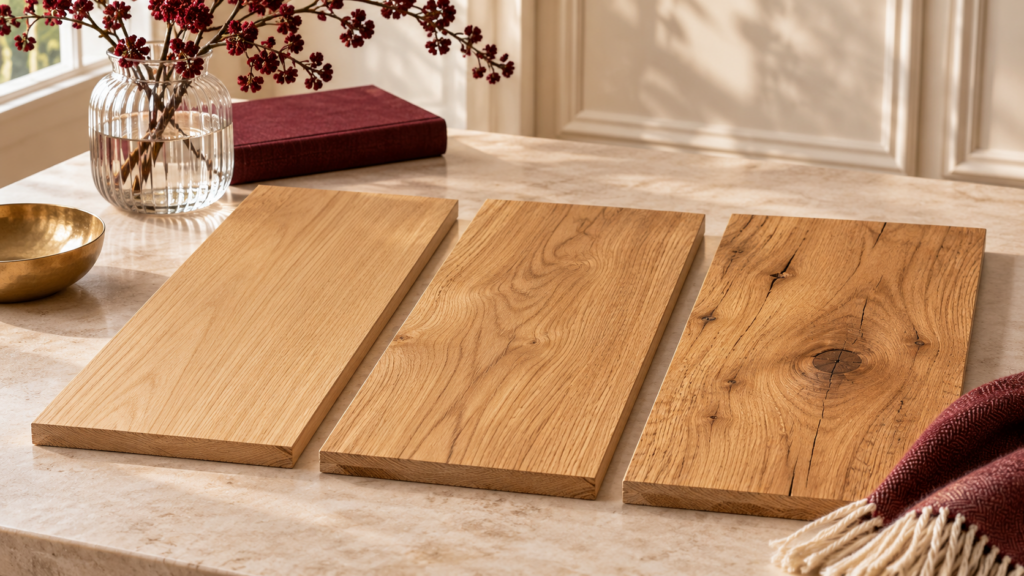
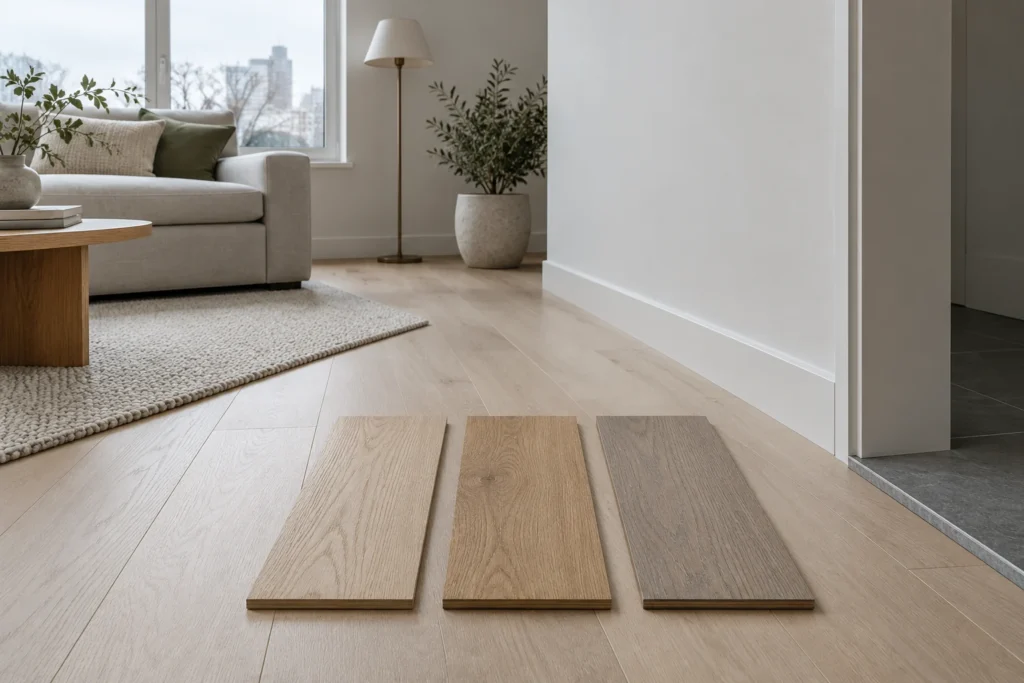
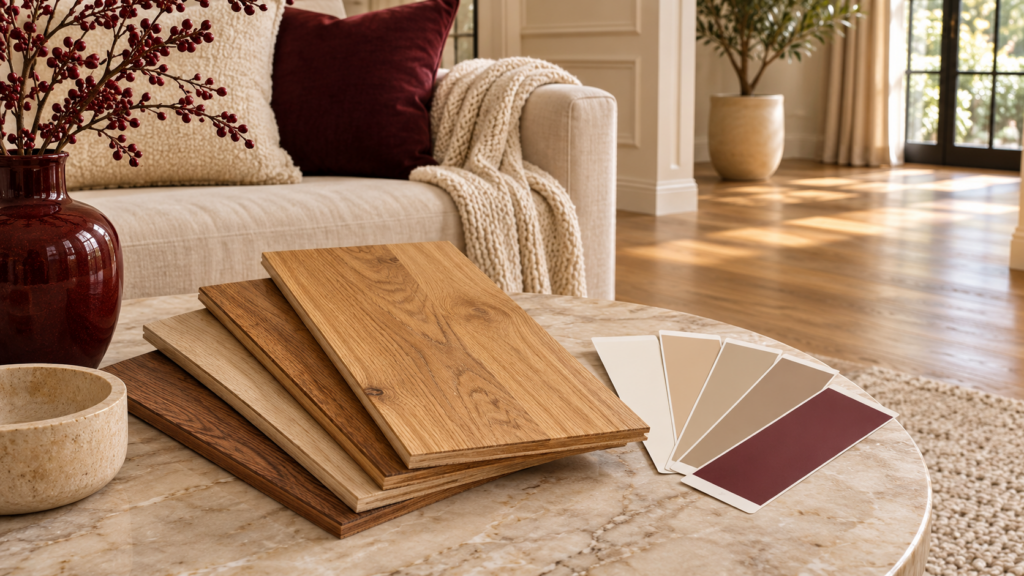
A small sample cannot show the full variation of a wood floor, and lighting changes how a finish looks. Bring a larger sample or several boards home. Look at them beside cabinets and upholstery in daylight and under the lights you actually use at night.
Our guide to testing hardwood samples in a north-facing room gives a more detailed comparison method. Keep the sample flat on the floor, not held vertically against a wall, when judging the final effect.
2. Buying a look without testing the upkeep
A floor can look wonderful in a photograph yet make you unhappy every time you notice dust or footprints. Bring your normal cleaning expectations into the decision. Compare sheen, texture and colour against the debris your household actually produces, such as pale pet hair or tracked-in grit.
Ask for the care instructions before buying. If you dislike the recommended maintenance routine now, an attractive discount is unlikely to make it more appealing later.
3. Treating every wood-look material as interchangeable
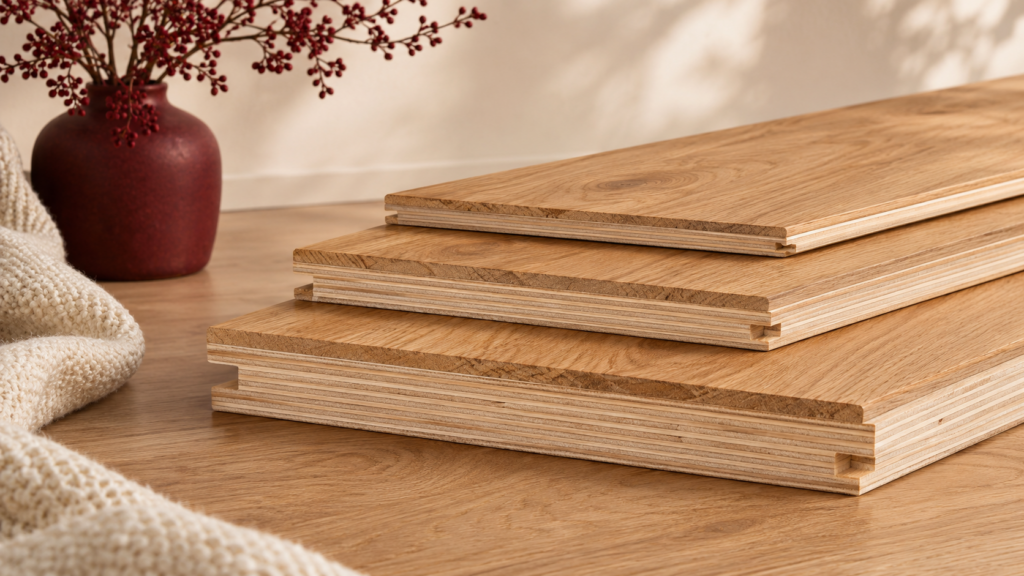
Solid hardwood, engineered hardwood, laminate and vinyl do not have identical construction or installation requirements. Start with the room’s exposure, the substrate and your expectations for repair. Do not assume engineered wood is waterproof simply because it has several layers.
For a basement or another moisture-sensitive space, investigate the actual conditions first. Choosing a finish material does not solve an unresolved water-entry or substrate-moisture problem.
4. Spending the preparation budget on a more expensive plank
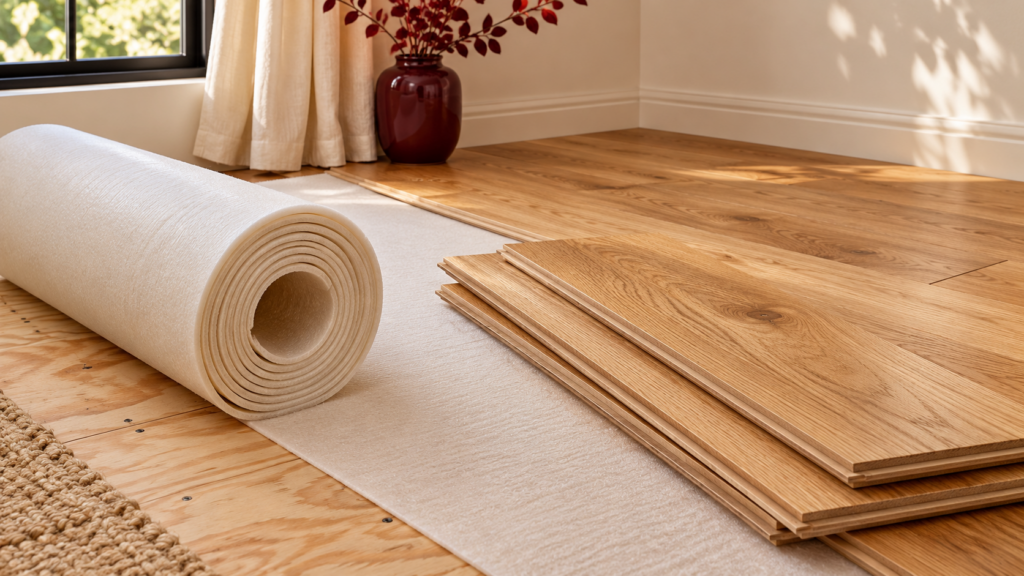
The floor underneath affects the result above. A premium board cannot make an uneven or unsuitable substrate disappear. Ask the installer what preparation is included, how flatness will be assessed and how additional repairs would be priced.
Compare complete project quotes rather than material prices alone. Delivery, removal, preparation, transitions, installation and disposal can change the real comparison substantially.
5. Forgetting the edges of the room
Before ordering, check tile transitions, stair nosings, exterior doors and appliance clearances. A beautiful field of flooring can still feel unfinished if the edges are awkward. Have transition details agreed alongside the main material, including matching or complementary trim availability.
If you are changing the floor height, check how it affects adjacent spaces. This is easier to solve on a plan than after the last plank is installed.
6. Expecting a future repair to be invisible
Ask how the selected floor can be repaired. A board replacement, local finish repair or full refinishing are different jobs. Textured surfaces and factory finishes may not reproduce exactly after repair, and future stock can differ from the original batch.
Discuss an appropriate quantity of spare material and suitable storage. Keep the product name, colour, batch details and care documents with your renovation records.
7. Letting resale guesses override daily life
It is reasonable to consider a future buyer, but you will live with the floor first. Choose for the household’s use, budget and maintenance tolerance rather than an unsupported promise that one fashionable colour will deliver a particular return.
Bring a decision checklist, not just a mood board
At LV Hardwood Flooring, bring room photos, measurements, samples of nearby finishes and a short list of practical needs. Include pets, stairs, radiant heat or condo requirements where relevant. The goal is not the most expensive floor: it is a floor whose appearance and everyday behaviour both work for your home.
Tag