Hardwood Flooring for Toronto Condos: What You Need to Know Before You Buy
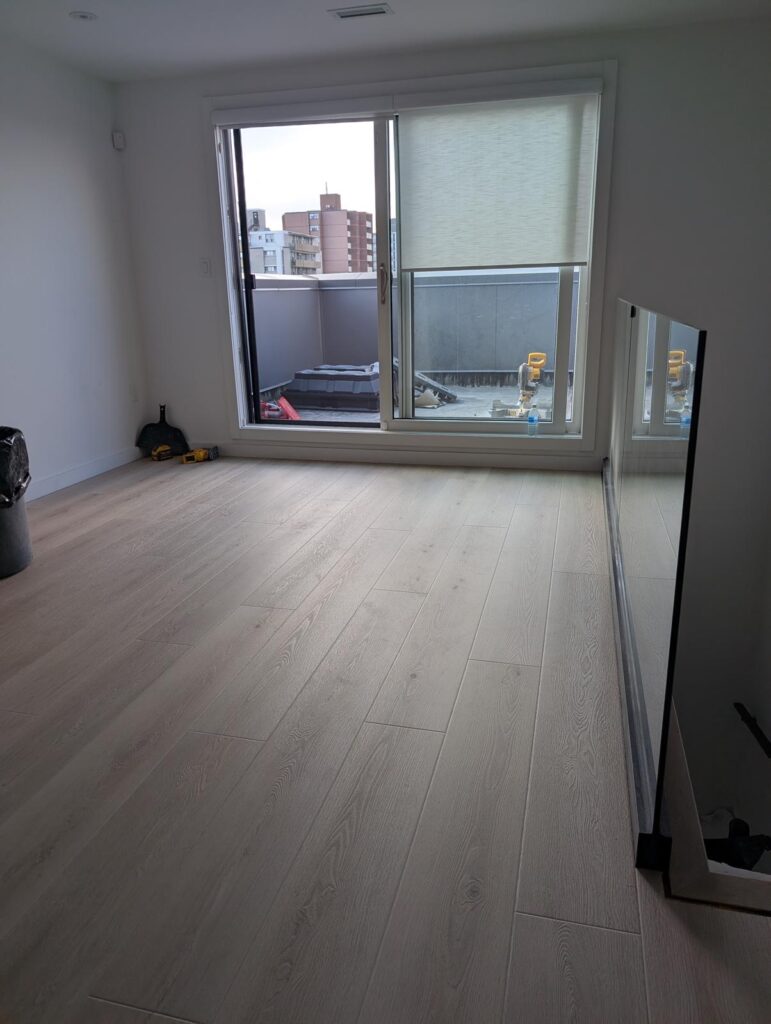
Renovating a condo in Toronto is a different project from renovating a house — and your flooring choice is where that difference shows up first. Concrete subfloors, strict condo board bylaws, acoustic requirements, elevator bookings, and the HVAC-driven humidity swings of a high-rise all shape what you can install, how it gets installed, and what it will cost. Get these details right before you buy a single plank, and the project runs smoothly. Miss them, and you could face a rejected permit, a noise complaint from the neighbour below, or floors that gap and warp within a year.
At LV Hardwood Flooring, we’ve worked in condos across the GTA — from Liberty Village studios to Yorkville penthouses — and we understand the fine print that catches condo owners off guard.
Why Condo Flooring Is Different From a House
In a detached home, your main constraints are budget and subfloor condition. In a Toronto condo, you add three more layers of complexity.
First, almost every mid- and high-rise in the city is built on a concrete slab. Concrete is prone to moisture vapour transmission and offers no give — which rules out nail-down solid hardwood in most cases and changes how adhesives and underlayments perform.
Second, you share a building with your neighbours. Sound — specifically impact sound, the thud of footsteps — travels easily through concrete. Toronto condo boards typically require flooring assemblies to achieve a minimum Impact Insulation Class (IIC) rating of 55 or higher, and some buildings push that requirement to IIC 60 or even IIC 65 in older towers with thinner slabs. Standard foam underlayment does not meet these thresholds. You need a tested, certified acoustic membrane — and you need to be able to prove it to the board with a lab test certificate, not just a marketing claim.
Third, you need board approval before a single board goes down. Most buildings in Toronto, North York, Mississauga, and Etobicoke require a written flooring application that specifies the material, installation method, underlayment product, and its certified IIC/STC ratings. The review process typically takes two to four weeks. Plan accordingly.
What Flooring Can You Actually Install in a Toronto Condo?
Engineered hardwood — the right choice for most condos
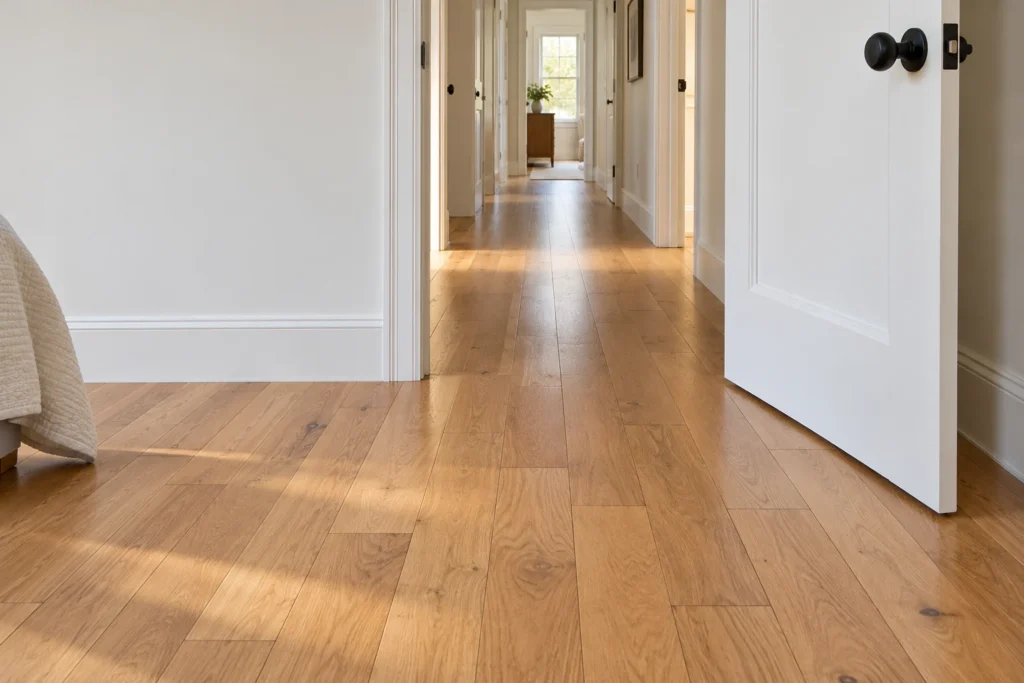
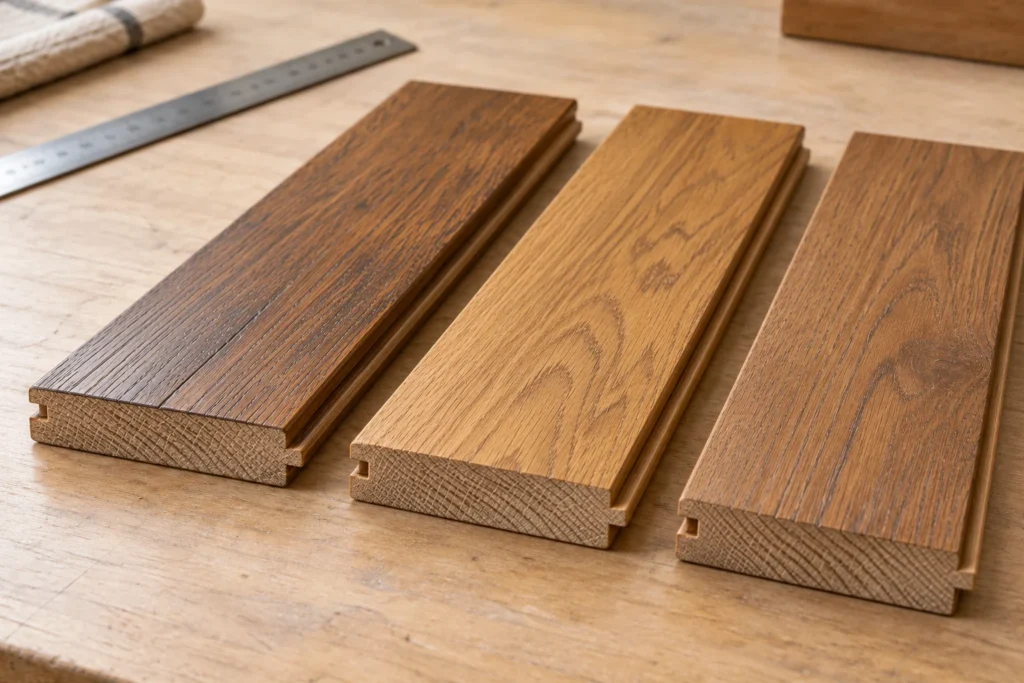
Engineered hardwood is the default recommendation for Toronto condo owners who want the look and value of real wood. Its cross-ply construction — layers of plywood or HDF bonded beneath a real hardwood veneer — gives it the dimensional stability that a concrete subfloor and fluctuating HVAC-driven humidity demand. Where solid hardwood would cup, gap, and warp through Toronto’s bone-dry winters and humid summers, engineered hardwood holds its shape.
It can be glued directly to concrete (glue-down method) or floated over an acoustic underlayment (floating method). Glue-down delivers a more solid, permanent feel underfoot; floating is faster, generates less dust, and is easier to reverse if you sell and the next owner wants something different.
In 2026, the most popular engineered hardwood species in Toronto condos are white oak (neutral, wide grain, works with any palette), maple (clean, consistent look, very hard), and red oak (warmer tones, slightly more affordable). Wide-plank formats — 5 inches and up — are particularly popular because they make a 650 sq. ft. condo feel more open.
Material cost: $4–$8 per sq. ft. for quality engineered hardwood. Installed, budget $10–$20 per sq. ft. all-in, including acoustic underlayment and subfloor prep.
Luxury vinyl plank (LVP) — best for kitchens, bathrooms, and budget renovations
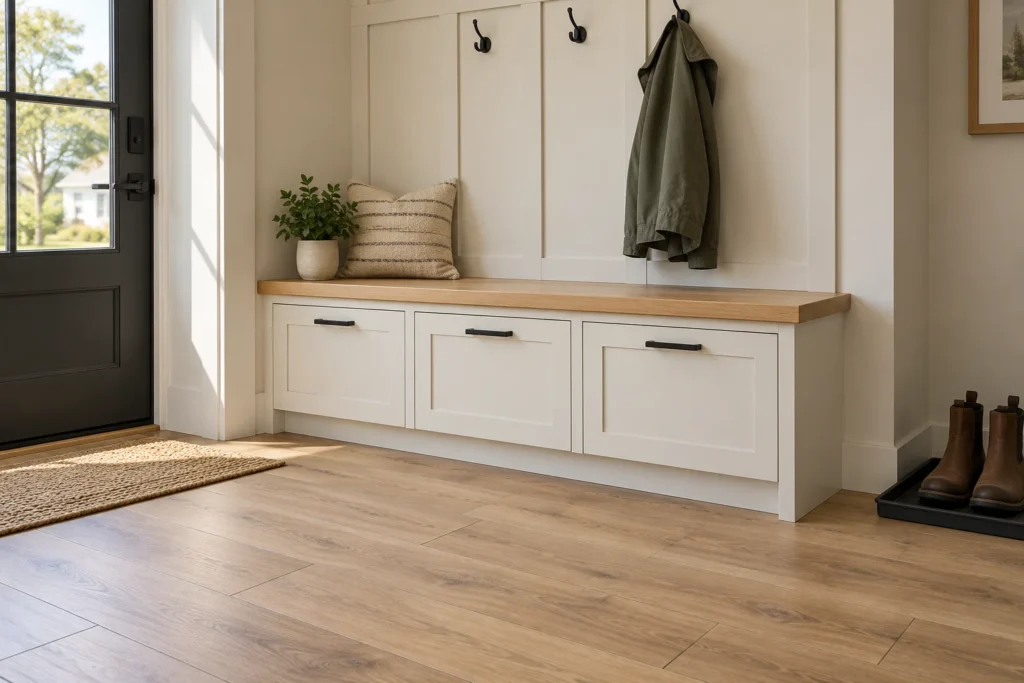
LVP is 100% waterproof, handles humidity without movement, and installs quickly with a floating click-lock system. For condo kitchens, laundry closets, and bathrooms — or for owners who want the lowest total cost — it’s a practical choice. Premium LVP with a rigid SPC core also pairs well with acoustic underlayment to meet IIC requirements.
Material cost: $2–$4 per sq. ft. Installed: $5–$8 per sq. ft.
Laminate — a durable mid-range option
Modern laminate has improved dramatically and is a strong choice for condo owners who want scratch resistance and a consistent look at a lower price point. It is water-resistant (not fully waterproof), so it works well in living areas and bedrooms. Like LVP, it installs as a floating floor and pairs with acoustic underlayment.
Material cost: $2–$4 per sq. ft. Installed: $5–$8 per sq. ft.
Solid hardwood — generally not permitted
Most Toronto condo boards do not permit nail-down solid hardwood because concrete subfloors cannot accept the nails or staples the method requires. Some boards will approve glue-down solid hardwood in rare cases, but the dimensional instability of solid wood on concrete in a climate-controlled high-rise creates long-term problems. If a salesperson is pushing solid hardwood for your condo without addressing these issues, that’s a red flag.
Acoustic Underlayment: The Detail That Gets People Into Trouble
This is the single most common point where condo flooring projects go wrong. A homeowner buys beautiful engineered hardwood, picks up a roll of standard 3mm foam underlayment at the hardware store, and submits the application to the board. The board rejects it because the foam has no certified IIC rating — or a rating well below the building’s minimum.
The solution is a certified acoustic membrane — cork, rubber, or a composite system — with a lab-tested IIC rating that meets or exceeds your building’s requirement. These products cost more than standard foam (typically $1.50–$3.00 per sq. ft. versus $0.30–$0.50 for foam), but they are not optional in most Toronto buildings.
At LV Flooring, we specify the correct underlayment for your building’s requirements and provide the certification documentation your condo board needs. Because we manufacture and distribute our own product lines, we can source and match underlayment to specific flooring systems — something a retailer selling only materials cannot do.
Getting Condo Board Approval: A Practical Checklist
Before submitting your flooring application, have the following ready:
- Flooring product specification sheet (species, construction, wear layer thickness)
- Underlayment product data sheet with certified IIC and STC ratings
- Proposed installation method (glue-down or floating)
- Contractor name and contact (many boards require a licensed installer)
- Timeline for work (including elevator booking dates)
Check your condo’s declaration and rules document — it will specify the exact IIC minimum and any restrictions on installation hours, waste disposal, and elevator usage. Most Toronto condo buildings limit construction work to Monday–Friday, 8 a.m.–5 p.m. or similar, which affects your installation timeline.
Installation Logistics: What Changes in a High-Rise
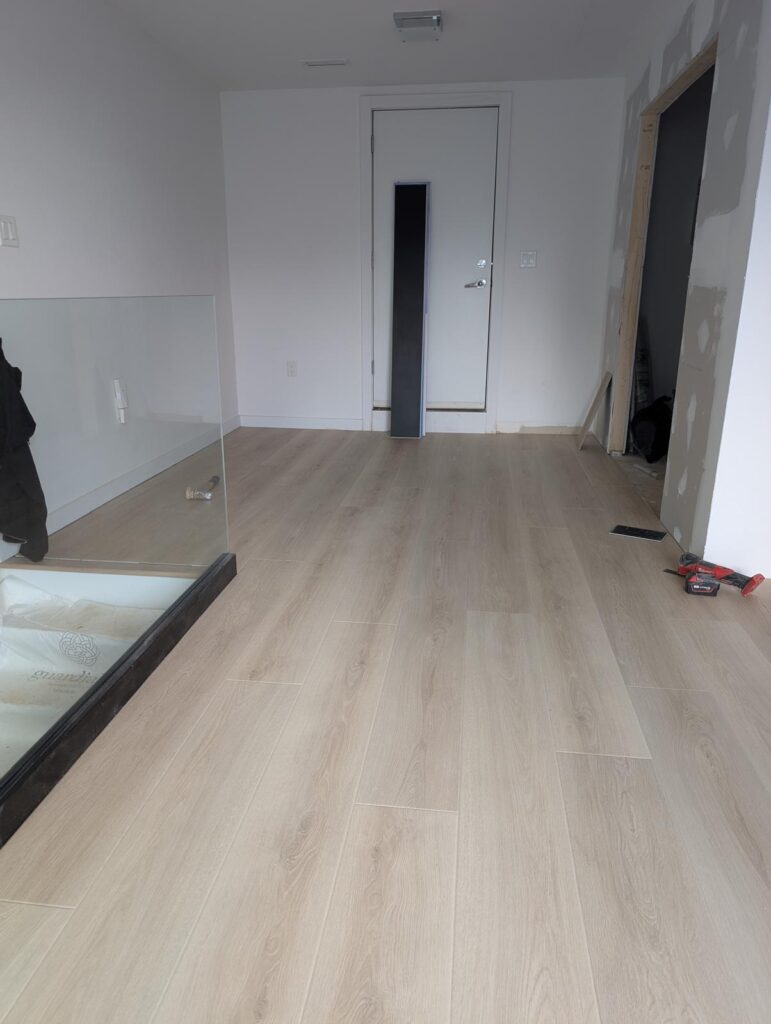
Installing flooring in a condo is more operationally complex than a house job. Factor in:
Elevator booking. Most buildings require advance notice of two to four weeks to reserve the freight elevator. Materials cannot be hand-carried up 15 floors. If your booking falls through, your installation date moves.
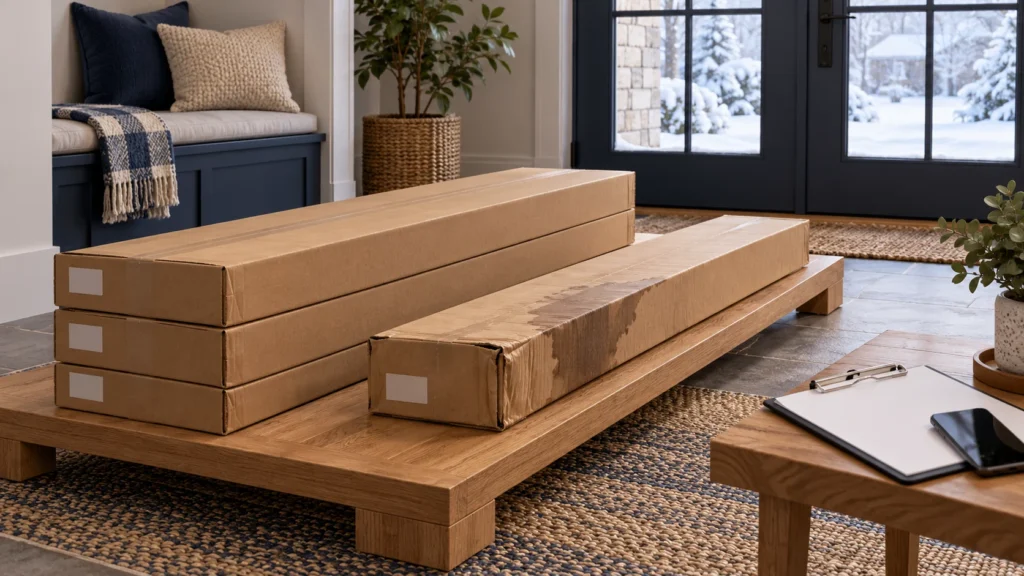
Material delivery and acclimation. Engineered hardwood needs to acclimate to the temperature and humidity of your unit for 48–72 hours before installation. In a condo, this means storing boxes flat in the space — plan for limited movement around the unit during this period.
Dust and debris management. Glue-down installations and subfloor grinding generate significant dust. Buildings often require plastic sheeting over common-area hallways and elevator interiors. Disposal of old flooring, underlayment, and packaging must go through the building’s approved waste process — not the common garbage room.
Condo-specific subfloor prep. Concrete slabs in Toronto condos are rarely perfectly flat. Self-levelling compound is often required to bring the floor to within the 3/16-inch-over-10-feet tolerance that most engineered hardwood manufacturers specify. This adds cost but prevents squeaks, hollow spots, and premature wear.
How Much Does Condo Flooring Cost in Toronto? (2026)
Costs for a typical Toronto condo renovation (600–800 sq. ft.):
| Item | Cost range |
|---|---|
| Engineered hardwood material | $4–$8 / sq. ft. |
| Acoustic underlayment | $1.50–$3.00 / sq. ft. |
| Subfloor levelling (if needed) | $1–$3 / sq. ft. |
| Installation labour — floating (click) | $2–$3 / sq. ft. |
| Installation labour — glue-down | $3–$4 / sq. ft. |
| Removal of existing flooring | $1–$2 / sq. ft. |
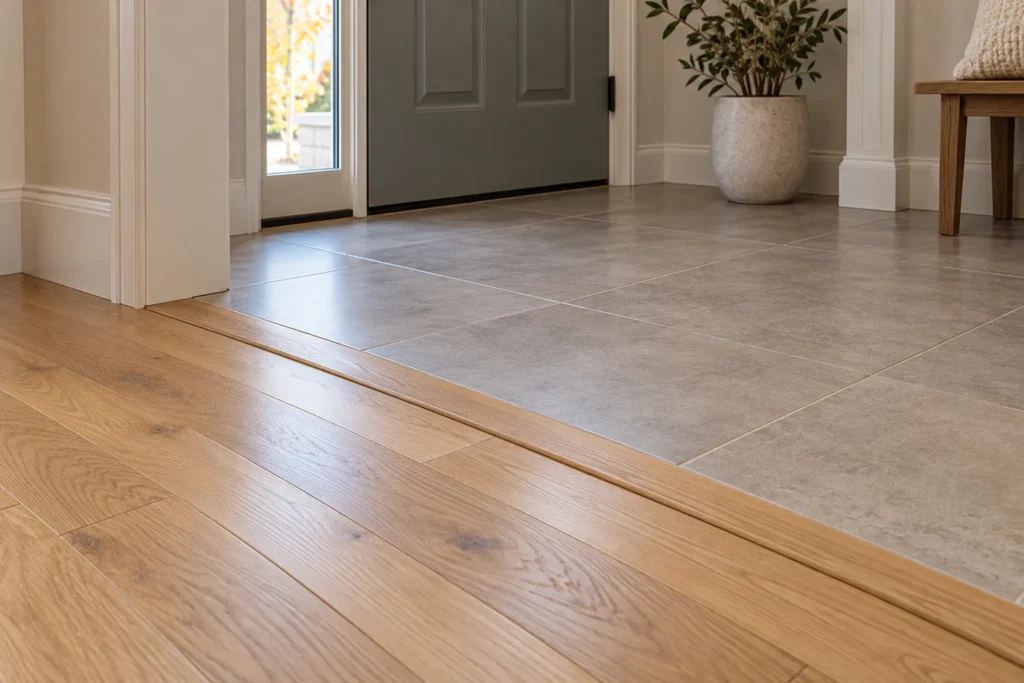
| Transitions, trims, baseboard reinstall | $300–$800 flat |
| Total (typical range) | $10–$20 / sq. ft. |
⚠️ Professional Notice: Every flooring project in the GTA is unique. The figures above reflect general market ranges only — final costs depend on subfloor condition, unit layout, building requirements, and material selection. Prices are subject to change without notice. For the most accurate estimate for your specific project, we invite you to visit our showroom at 5050 Dufferin St #102, North York, or call our team for a free consultation.
Why LV Flooring for Your Condo Project
Because we’re a manufacturer and distributor as well as an installer, we control the supply chain from product selection through to completed installation. That means consistent material availability, competitive pricing without retailer markup, and one team accountable for the entire job — not a retailer who hands you off to a subcontractor.
We carry a full range of engineered hardwood species and formats suitable for condo installation, certified acoustic underlayment systems, and the documentation your condo board needs. Our installers work in condo buildings across Toronto, North York, Etobicoke, Scarborough, Mississauga, and the broader GTA regularly — the logistics are familiar territory.
Frequently Asked Questions
Does my condo board need to approve new flooring? In almost all Toronto condos, yes. Your building’s declaration will specify the approval process and technical requirements. Allow two to four weeks for board review before booking installation.
Can I install solid hardwood in my Toronto condo? In most cases, no. Concrete subfloors are not compatible with nail-down installation, and the dimensional instability of solid wood in a climate-controlled high-rise creates long-term problems. Engineered hardwood is the appropriate choice.
What IIC rating do I need? Check your building’s declaration. Most Toronto condos require IIC 55 or higher. Some older buildings and buildings in the downtown core specify IIC 60 or IIC 65. Your flooring installer should be able to provide a compliant underlayment system with a certified lab test result.
How long does condo flooring installation take? A 700 sq. ft. condo typically takes one to two days for a floating installation and two to three days for glue-down. Add time for subfloor prep, acclimation, and elevator scheduling.
Does new flooring increase my condo’s resale value? Yes. Updated flooring — particularly engineered hardwood — is consistently cited by Toronto real estate agents as one of the top ROI renovations for condo units. Buyers respond to move-in-ready finishes, and worn or dated flooring is a common price negotiation point.
Visit Our Showroom or Get a Free Quote
Our showroom is at 5050 Dufferin St #102, North York — a straight shot from most Toronto condo neighbourhoods. Get directions on Google Maps. Bring your building’s flooring requirements and your unit’s floor plan, and we’ll help you identify the right material, confirm acoustic compliance, and put together a detailed quote.
Call: (416) 665-5645 or (647) 728-1111 Email: [email protected] Hours: Monday–Friday 9:00–18:00, Saturday 9:30–15:00
Related: Engineered Hardwood Flooring · Hardwood Floor Installation · Hidden Costs of Flooring Renovations in Toronto · LVP Flooring